

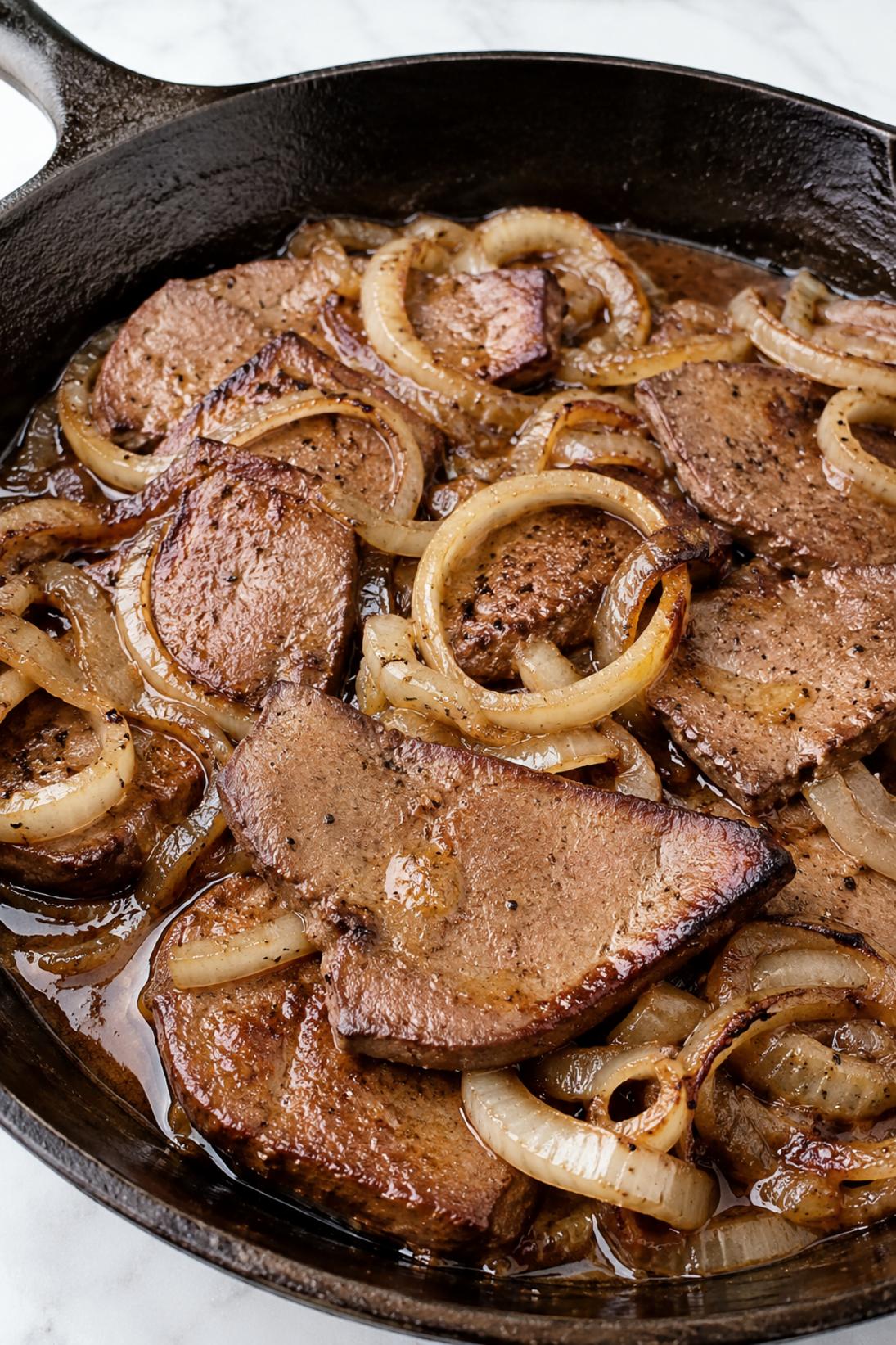
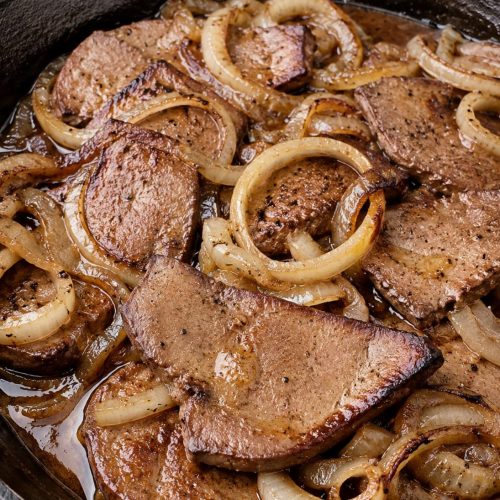
Beef Liver and Onions Skillet is a straightforward, old-school dinner that still holds up when you want something savory, quick, and really satisfying. The onions get deeply golden, the liver stays tender, and the whole thing finishes in a simple pan gravy that tastes like you actually cooked.
I like this version because it keeps the flavors clean and classic, with just enough seasoning to make the liver taste like itself (in a good way). The little bit of flour gives you a nice, light coating so the skillet builds those browned bits that make the gravy worth pouring over everything.
For me, this is best on a weeknight when I want a fast skillet dinner that feels like a real plate of food. I usually serve it with mashed potatoes or rice so nothing goes to waste once the gravy hits the pan.
Why You’ll Love This Recipe
Weeknight Friendly: It’s a quick skillet meal that doesn’t need a long ingredient list or a lot of cleanup.
Real Onion Flavor: The onions cook down until they’re soft and deeply golden, which makes the whole dish taste richer.
Tender Liver: A quick sear keeps the liver from turning grainy, and the milk soak is there if you want a milder bite.
Pan Gravy Bonus: The gravy is made right in the same skillet, so you get all the good browned bits without extra work.
Easy to Adjust: You can use calf liver for a milder taste, swap in chicken livers, or make the gravy a little creamier if that’s your thing.
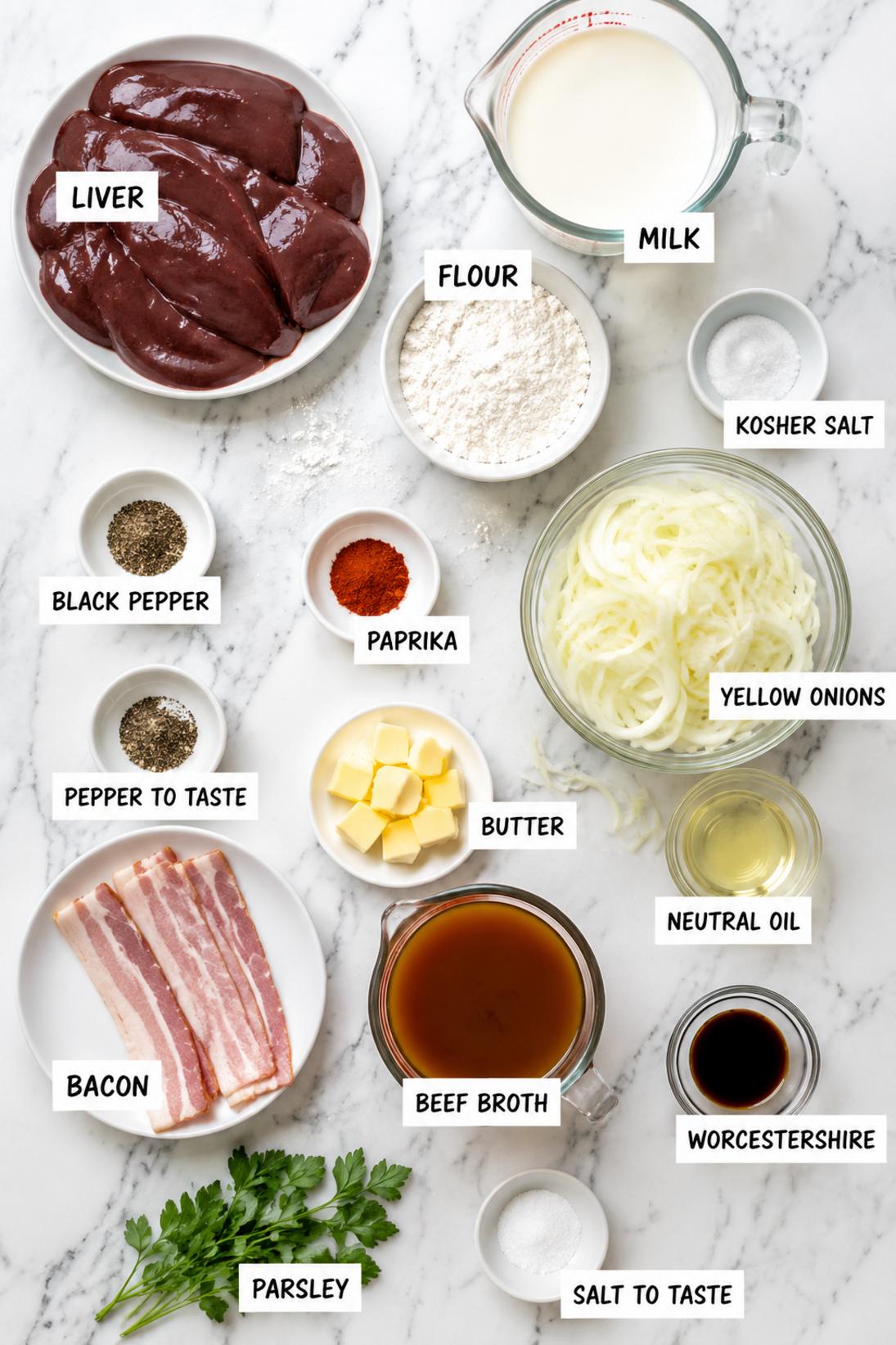
Ingredients You’ll Need
Liver Prep
- Beef liver: I like it sliced evenly so it cooks fast and stays tender. If there’s any outer membrane, peeling it off helps a lot with texture.
- Milk: Optional, but it’s nice if you want a milder flavor. It also helps take the edge off if you’re feeding someone who’s on the fence about liver.
- All-purpose flour: Just a light dredge here. It helps the liver brown and gives the gravy a little body once the broth hits the pan.
- Kosher salt: Seasoning the flour is the easiest way to make sure every piece gets a little salt.
- Black pepper: I keep it simple with regular black pepper. Add a little extra at the end if you like more bite.
- Paprika: This adds a gentle warmth and helps the coating brown nicely. Regular paprika is totally fine.
Skillet and Onions
- Yellow onions: Big, thin slices work best because they soften and caramelize quickly. I don’t bother with fancy cuts here—just slice them thin and keep stirring.
- Unsalted butter: Butter makes the onions taste right and helps the liver brown. I like unsalted so I can control the salt at the end.
- Neutral oil: A little oil keeps the butter from burning, especially once the heat goes up for the sear.
- Bacon: Optional, but it gives you a smoky edge and a little extra richness in the pan. If you skip it, just start with butter and oil.
Pan Gravy and Finish
- Beef broth: This deglazes the skillet and turns the browned bits into a quick gravy. Use a broth you like the taste of, since it shows up in the final dish.
- Worcestershire sauce: A small amount adds that savory, slightly tangy background that works really well with liver and onions.
- Salt: I always wait to add extra salt until the gravy simmers for a minute, since broth and bacon can vary.
- Black pepper: A little more at the end is good, especially if your broth is mild.
- Fresh parsley: Optional, but nice if you want a little freshness on top. Even a small handful makes the plate look less heavy.
Recipe Instructions
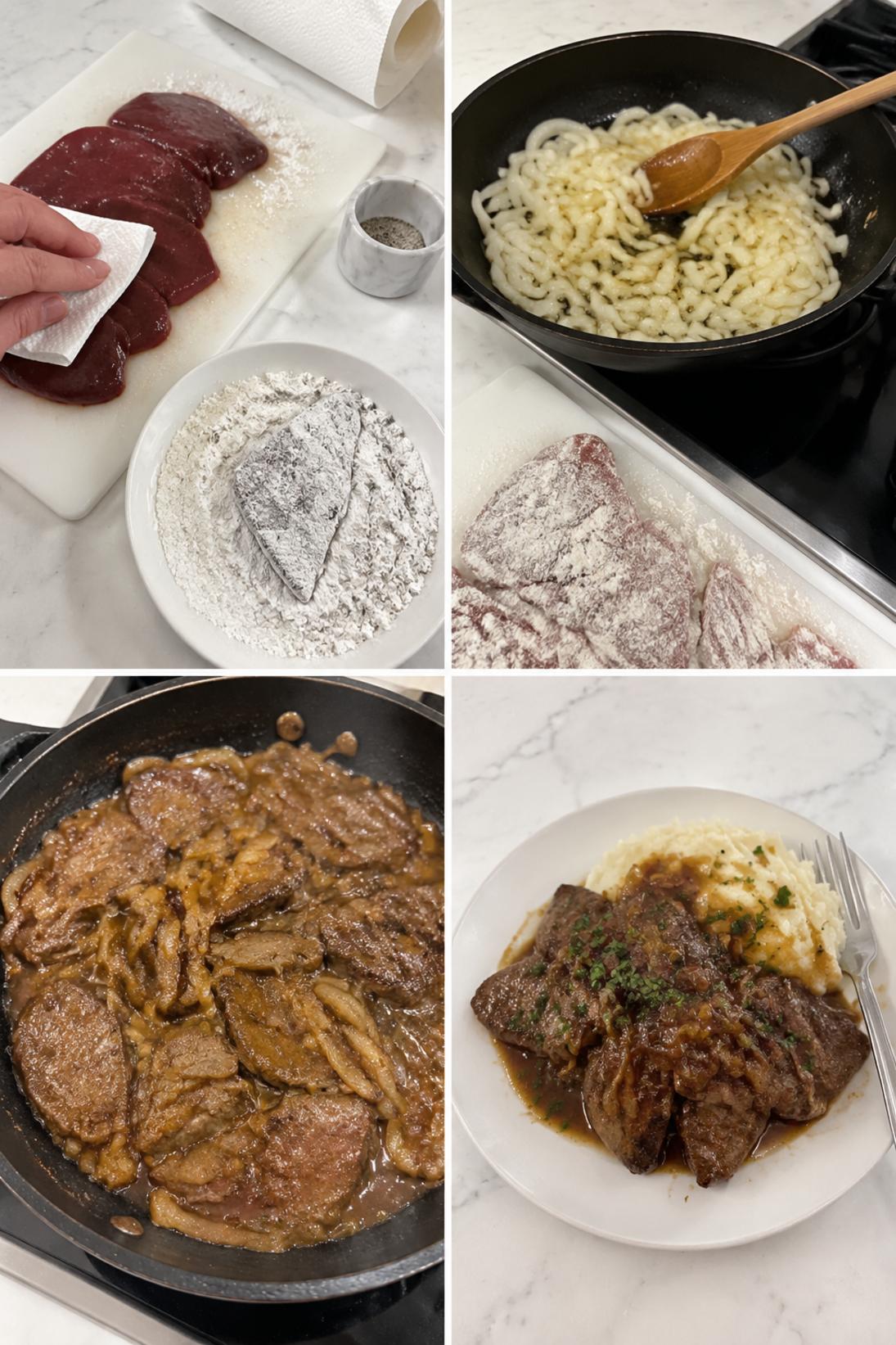
- Soak the liver: If you’re using milk, soak the liver for 20 to 30 minutes, then drain and pat it very dry with paper towels.
- Season the flour: In a shallow bowl, mix the flour with the salt, pepper, and paprika.
- Dredge the liver: Coat the liver lightly in the seasoned flour, then shake off the excess and set it aside.
- Cook the bacon: In a large skillet over medium heat, cook the bacon until crisp. Remove it to a plate and leave about 1 to 2 tablespoons drippings in the skillet (or add butter and oil if you’re not using bacon).
- Cook the onions: Add the onions with a pinch of salt and cook, stirring often, until softened and deeply golden, about 10 to 12 minutes. Transfer the onions to a plate.
- Sear the liver: Increase the heat to medium-high and add the remaining butter if the skillet looks dry. Sear the liver in a single layer until browned and just cooked through, about 1 to 2 minutes per side, then move it to a warm plate.
- Make the gravy: Reduce the heat to medium, whisk in the beef broth and Worcestershire sauce, and scrape up the browned bits from the bottom of the skillet. Simmer for 2 to 3 minutes, until lightly thickened.
- Warm and serve: Return the onions and liver to the skillet just to warm through, about 1 to 2 minutes. Taste and adjust salt and pepper, then serve with parsley (and crumbled bacon, if using).
Some of my tips!
This is the part that really makes a difference. If you only read one section, make it this one because this is where I share the little trick that helps the recipe turn out so well.
Recipe Tips & Tricks
Pat the liver very dry. This is the difference between a good sear and liver that steams in the pan. I use a lot of paper towels and don’t rush it.
Slice it evenly. If some pieces are thin and some are thick, you’ll end up overcooking part of it. Even slices cook fast and stay tender.
Don’t overcook the liver. Once it goes past “just cooked,” it turns grainy and tough pretty quickly. I’d rather pull it early and let it warm back up in the gravy for a minute.
Let the onions get properly golden. If you stop when they’re just soft, the dish tastes flatter. Give them the full time so they turn deep gold and a little jammy.
Use calf liver if you want it milder. It’s more forgiving and has a softer flavor. If you’re new to liver, that’s usually where I’d start.
Chicken livers work too. They cook faster, so keep the sear closer to about 1 minute per side and watch them closely.
Make some touches!
There are plenty of easy ways to serve this depending on the occasion. Keep it simple, or add a few small touches to make it feel a little more special.
Serving Suggestions
- Mashed potatoes: This is my favorite with the pan gravy and onions. Even a simple mash with butter and salt is enough.
- Rice or egg noodles: If you want something easy that soaks up the gravy, rice or buttered noodles are great. It’s also a nice way to stretch the meal a bit.
- Green vegetables: I like something plain like green beans, peas, or sautéed spinach on the side. It keeps the plate from feeling too heavy.
- Simple salad: A basic lettuce salad with a sharp vinaigrette is good here. Something with cucumbers or tomatoes works well.
- Extra garnish: A little chopped parsley is nice, and crumbled bacon on top makes it feel more like a diner-style plate.
Save it for later
This section covers how to store leftovers and what parts of the recipe you can prepare ahead of time.
Storage and Make Ahead
Store leftovers covered in the fridge for up to 3 days. Liver is best the day you cook it, but leftovers are still good if you don’t overheat them.
To reheat, I usually warm it gently in a skillet with a splash of broth or water to loosen the gravy. The microwave works too, but keep the heat lower so the liver doesn’t toughen up.
You can slice the onions and prep the dredge earlier in the day to make dinner faster. I don’t love searing the liver ahead of time, since it’s easy to overcook when you rewarm it.
If you want to freeze it, freeze individual portions in an airtight container. Thaw in the fridge overnight and reheat gently; the texture won’t be quite the same, but it’s still usable.
A few quick answers
This section covers a few extra details that may help before you head to the recipe card.
Recipe FAQs
Do I have to soak liver in milk?
No. I consider it optional, but it does help mellow the flavor and can make the smell a little less strong while cooking. If you already like liver, you can skip it.
How do I know when liver is done?
I cook it until it’s browned on the outside and just cooked through, usually 1 to 2 minutes per side depending on thickness. If you overcook it, it gets grainy fast, so I err on the side of pulling it early and letting it warm in the gravy.
Can I use chicken liver instead of beef liver?
Yes, chicken livers work well here. They’re smaller and cook faster, so keep the sear to about 1 minute per side and don’t crowd the pan.
How can I make the gravy a little richer?
You can stir in a tablespoon of cream at the end, or swap the beef broth for a richer stock if you have one. Bacon drippings help too, if you’re using bacon.
Why is my liver tough?
The most common reason is overcooking, or having pieces that are different thicknesses so some cook too long. Slicing evenly, patting it dry, and keeping the sear short makes a big difference.
You might also like
Before you go, take a look at a few other recipes below the recipe card. They use similar ingredients in a different way and are worth saving too.
MORE DINNER RECIPES TO TRY



Beef Liver and Onions Skillet
INGREDIENTS
Liver Prep
- 1 lb beef liver sliced 1 4 inch thick
- 1 cup milk for soaking optional
- 1 2 cup all purpose flour
- 1 tsp kosher salt
- 1 2 tsp black pepper
- 1 2 tsp paprika.
Skillet and Onions
- 2 large yellow onions thinly sliced
- 4 tbsp unsalted butter divided
- 2 tbsp neutral oil
- 4 slices bacon optional.
Pan Gravy and Finish
- 1 cup beef broth
- 1 tbsp Worcestershire sauce
- salt to taste
- black pepper to taste
- fresh parsley for garnish optional.
INSTRUCTIONS
Liver Prep
- Soak liver in milk 20 to 30 minutes then drain and pat very dry
- season flour with salt pepper and paprika then dredge liver lightly and shake off excess.
Cook Onions
- Cook bacon in a large skillet over medium heat until crisp then remove and reserve leaving 1 to 2 tbsp drippings or add butter and oil
- add onions with a pinch of salt and cook stirring until soft and deeply golden 10 to 12 minutes then transfer onions to a plate.
Sear Liver and Make Gravy
- Increase heat to medium high and add remaining butter if skillet looks dry
- sear liver in a single layer until browned and just cooked through 1 to 2 minutes per side then remove to a warm plate
- reduce heat to medium and whisk in broth and Worcestershire scraping browned bits and simmer 2 to 3 minutes until lightly thickened
- return onions and liver to skillet just to warm through 1 to 2 minutes then taste and adjust seasoning and serve.


