

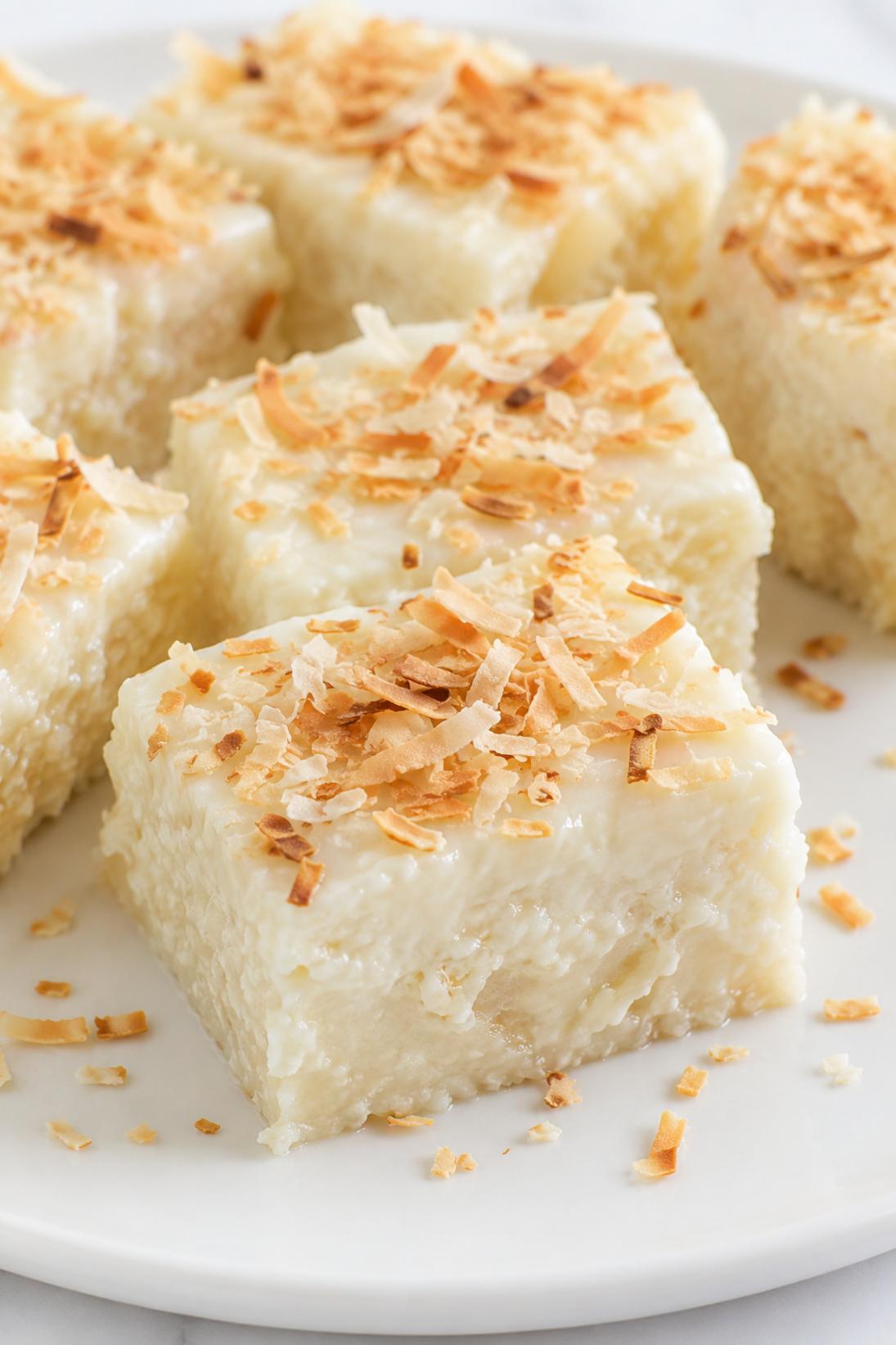
Coconut Pudding Dessert is a simple chilled pudding with a creamy set, gentle coconut flavor, and that little bit of texture from shredded coconut stirred in at the end.
I like this style of pudding because it’s rich in a calm, not-too-fussy way. The mix of coconut milk and whole milk keeps it smooth and milky instead of heavy, and the toasted coconut on top makes it taste more finished.
For me, it’s best as a make-ahead dessert for warm days, after spicy dinners, or any time I want something cold and clean-tasting. A little whipped cream on top is optional, but I rarely skip it.
Why You’ll Love This Recipe
Stovetop simple: No baking, no tempering eggs, and no special equipment. Just a saucepan and a whisk.
Cool and creamy: It sets up into a soft pudding that still feels light enough to eat after a big meal.
Coconut flavor that tastes real: Coconut milk plus a little shredded coconut gives you a coconut taste that doesn’t feel fake or overpowering.
Great texture on top: The toasted coconut adds crunch and keeps each spoonful from tasting flat.
Easy to tweak: You can make it dairy-free, switch the starch, or firm it up with a touch of gelatin depending on how you like your pudding.
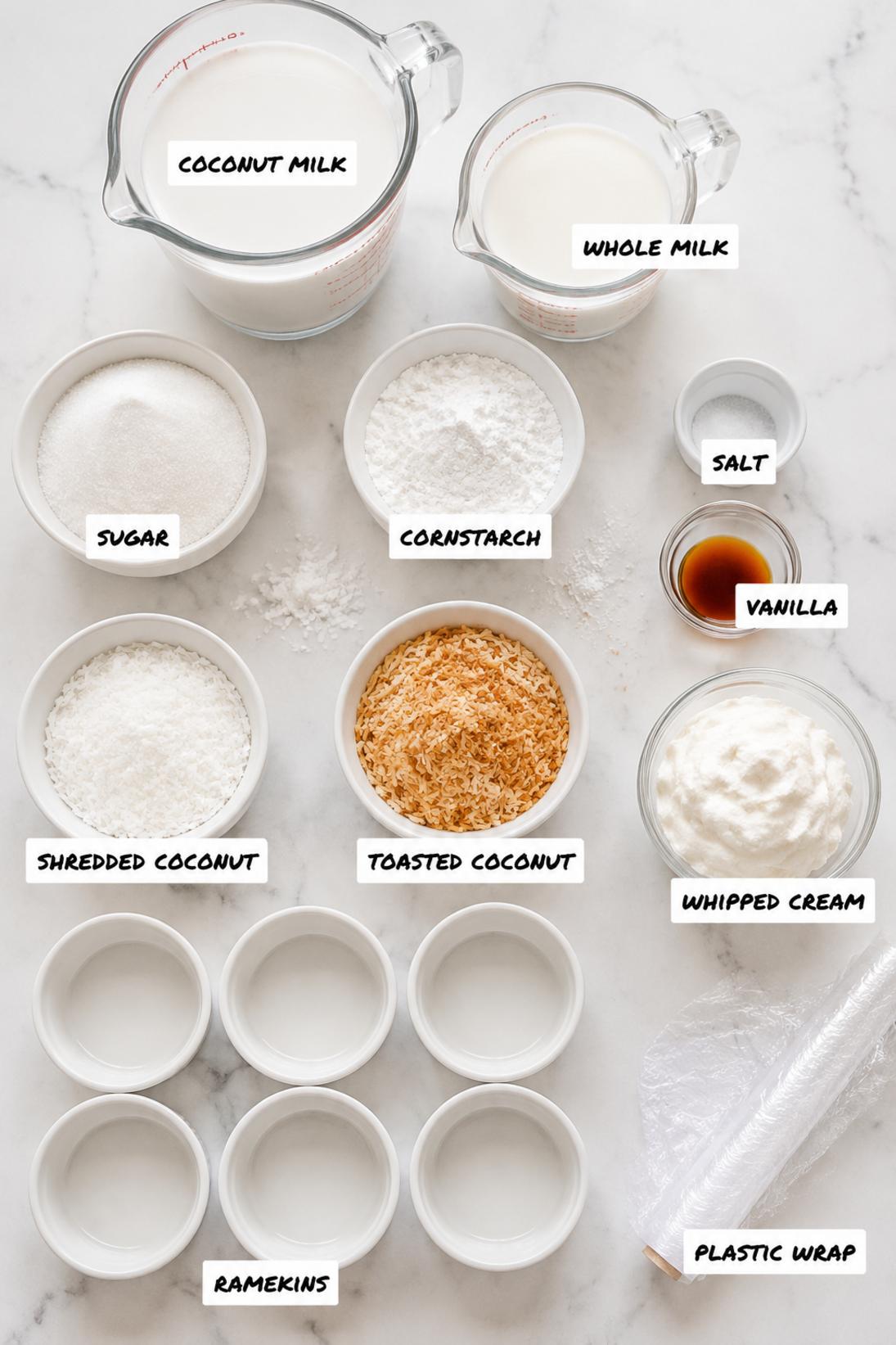
Ingredients You’ll Need
Pudding
- Full fat coconut milk: I use the canned kind (not the carton). Full fat gives the pudding that rich coconut base and helps it set up nicely.
- Whole milk: This keeps the pudding tasting a little more like a classic custard-style pudding. You can swap in more coconut milk if you want it fully dairy-free.
- Granulated sugar: Regular white sugar is perfect here. If you like it less sweet, you can pull it back a little and it still sets fine.
- Cornstarch: This is what thickens and sets the pudding without eggs. I like the texture, but tapioca starch works too if you want it a bit silkier.
- Fine salt: Don’t skip it. A small amount keeps the coconut flavor from tasting flat.
- Vanilla extract: Vanilla makes the coconut taste rounder and more “dessert-like.” It’s subtle, but it matters.
- Shredded coconut: I like the little bit of chew it adds. If you prefer a perfectly smooth pudding, you can leave it out.
Topping
- Toasted shredded coconut: This is the finishing touch that makes the pudding feel special with almost no extra work. Toast it until it’s golden, not dark brown.
- Whipped cream: Optional, but really nice if you want it to feel more like a dessert cup. Lightly sweetened or unsweetened both work.
Recipe Instructions
- Mix the dry ingredients: Whisk the granulated sugar, cornstarch, and salt together in a medium saucepan until evenly combined.
- Add the milks: Whisk in the coconut milk and whole milk until the mixture is smooth and you don’t see any cornstarch lumps.
- Cook the pudding: Place the saucepan over medium heat and cook, whisking constantly, until the mixture thickens and comes to a gentle bubble.
- Cook a little longer: Keep cooking for 1 to 2 minutes more while whisking, so the pudding doesn’t taste starchy.
- Stir in the flavorings: Remove from the heat, then stir in the vanilla extract and shredded coconut.
- Portion and cover: Pour into 6 ramekins or small cups. Press plastic wrap directly on the surface of each one to prevent a skin.
- Chill: Refrigerate until fully set and cold, about 2 hours.
- Top and serve: Add toasted coconut and a dollop of whipped cream right before serving.
Some of my tips!
This is the part that really makes a difference. If you only read one section, make it this one because this is where I share the little trick that helps the recipe turn out so well.
Recipe Tips & Tricks
Whisk the dry ingredients first. Mixing the sugar and cornstarch before any liquid goes in really helps prevent lumps. It’s a small step, but it saves you from having to strain the pudding later.
Keep the heat at medium. If the heat is too high, the pudding can thicken too fast around the edges and get a little uneven. Medium heat gives you more control.
Don’t stop whisking once it starts warming. Coconut milk can separate if it sits, and cornstarch likes to settle. Constant whisking keeps the pudding smooth.
Cook out the starch. That extra minute or two after it thickens makes a difference. The pudding should taste clean and creamy, not powdery.
Press the plastic wrap right on the surface. This is the easiest way to avoid pudding skin. If you don’t mind a skin, you can skip it, but I prefer it covered.
Toast the coconut until just golden. It goes from pale to too dark pretty quickly. I pull it when it smells nutty and looks lightly browned.
Make some touches!
There are plenty of easy ways to serve this depending on the occasion. Keep it simple, or add a few small touches to make it feel a little more special.
Serving Suggestions
- Whipped cream: A small dollop on each cup is simple and classic. I like it best with just a little sugar and a pinch of salt.
- Fresh fruit: Mango, pineapple, or berries are nice on the side. It’s an easy way to make the bowl look a little more put-together.
- Extra toasted coconut: If you like a lot of crunch, add a heavier sprinkle right before serving. It also looks pretty in a glass dessert cup.
- Tea: This is really good with jasmine tea or lightly sweetened iced tea. Something simple works best.
Save it for later
This section covers how to store leftovers and what parts of the recipe you can prepare ahead of time.
Storage and Make Ahead
Store leftovers covered in the fridge for up to 4 days. Keep the plastic wrap pressed on the surface (or use a tight lid) so it doesn’t pick up fridge smells or form a skin.
You can make this recipe ahead the day before and keep it chilled until you’re ready to serve. I usually wait to add the toasted coconut and whipped cream until the last minute.
If you want to freeze it, you can freeze individual portions, but the texture may change a bit once thawed. Thaw in the fridge overnight and give it a good stir before topping.
A few quick answers
This section covers a few extra details that may help before you head to the recipe card.
Recipe FAQs
Can I make this coconut pudding dairy-free?
Yes. Use all coconut milk in place of the whole milk. It will taste more coconut-forward and a little richer, but it sets up just fine.
Can I use tapioca starch instead of cornstarch?
You can replace the cornstarch with an equal amount of tapioca starch. The pudding sets a bit silkier and slightly more “bouncy,” which I actually like for this recipe.
Why did my pudding turn out lumpy?
Lumps usually come from cornstarch not getting fully whisked in before heating, or from not whisking enough as it warms up. If it happens, you can strain it through a fine-mesh strainer before chilling.
How do I make it firmer and more sliceable?
For a firmer set, bloom 1 teaspoon powdered gelatin in 1 tablespoon water, then stir it into the hot pudding off the heat. It will set more firmly once chilled.
Do I have to use shredded coconut in the pudding?
No. It adds texture, but the pudding is still great without it. If you want it perfectly smooth, leave it out and just use the toasted coconut on top.
You might also like
Before you go, take a look at a few other recipes below the recipe card. They use similar ingredients in a different way and are worth saving too.
MORE DINNER RECIPES TO TRY



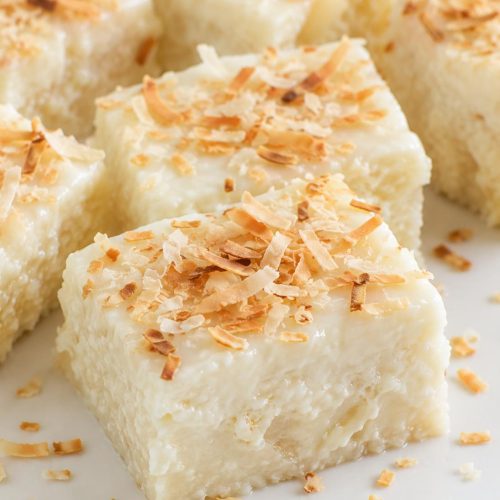
Coconut Pudding Dessert
INGREDIENTS
Pudding
- 2 cups full fat coconut milk
- 1 cup whole milk
- 1/2 cup granulated sugar
- 1/4 cup cornstarch
- 1/4 tsp fine salt
- 1 tsp vanilla extract
- 1/2 cup shredded coconut.
Topping
- 1/3 cup toasted shredded coconut
- whipped cream for serving.
INSTRUCTIONS
Cook Pudding
- whisk granulated sugar
- cornstarch
- and salt in a medium saucepan until evenly combined
- whisk in coconut milk and whole milk until smooth with no lumps
- place over medium heat and cook while whisking constantly until thickened and gently bubbling.
Finish And Chill
- cook 1 to 2 minutes more while whisking to remove any starchy taste
- remove from heat and stir in vanilla extract and shredded coconut
- pour into 6 ramekins or small cups and press plastic wrap directly on the surface to prevent a skin
- chill until fully set and cold about 2 hours then top with toasted coconut and whipped cream before serving.


