

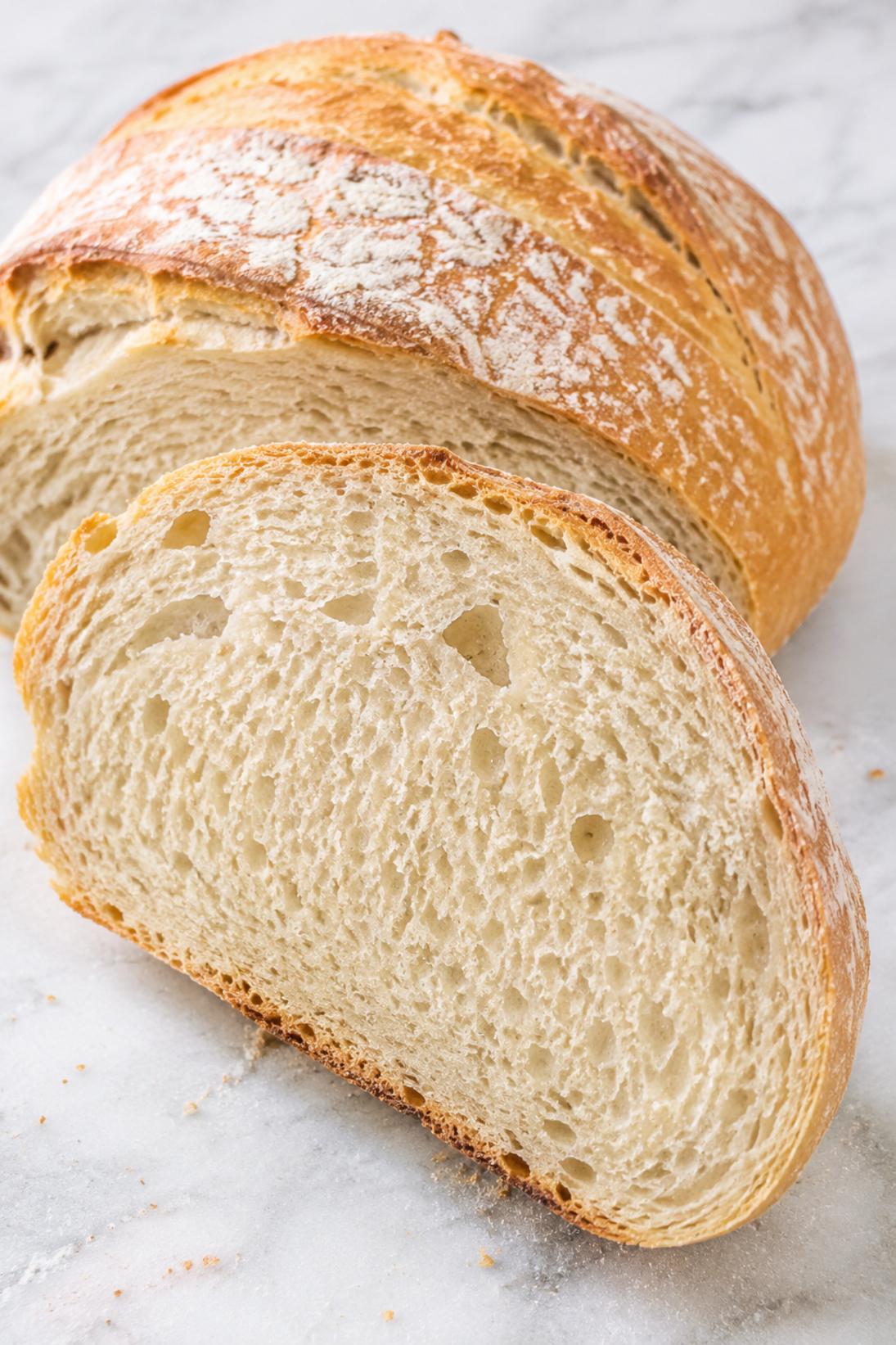
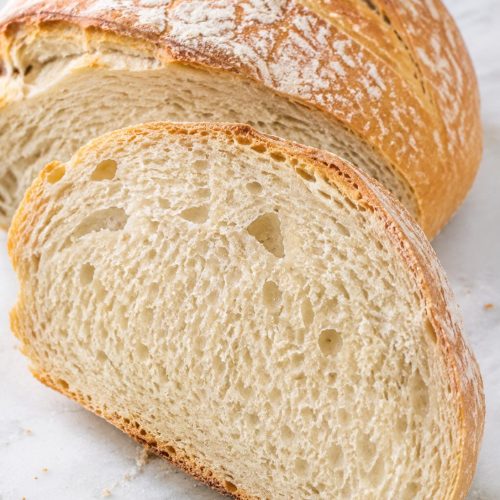
Country White Bread is the kind of soft, chewy loaf I keep coming back to for everyday sandwiches and toast. It has that simple, familiar flavor that tastes right with just about anything, and a lightly crisp crust that still stays easy to slice.
This version bakes up with a tender crumb that’s sturdy enough for peanut butter, grilled cheese, or a thick slice with butter and jam. I like it best when I want a classic white loaf that feels a little more country-style than store-bought sandwich bread.
For me, it’s especially good for weekend baking, because it carries you through the week. It’s also a great loaf to have around when you’re making soup, because it’s solid for dipping and doesn’t fall apart.
Why You’ll Love This Recipe
Soft slice: The crumb stays soft and chewy, so it works for everything from toast to deli-style sandwiches.
Simple ingredients: Nothing odd here, just basic pantry bread ingredients that make a dependable loaf.
Good crust: It bakes up lightly crisp on the outside, but you can keep it softer with a butter brush.
Beginner friendly: The dough is straightforward and forgiving, which is what I want when I’m making bread at home.
Easy to tweak: You can swap in a little all-purpose flour for extra softness or add some whole wheat if you like a heartier loaf.
Ingredients You’ll Need
Dough
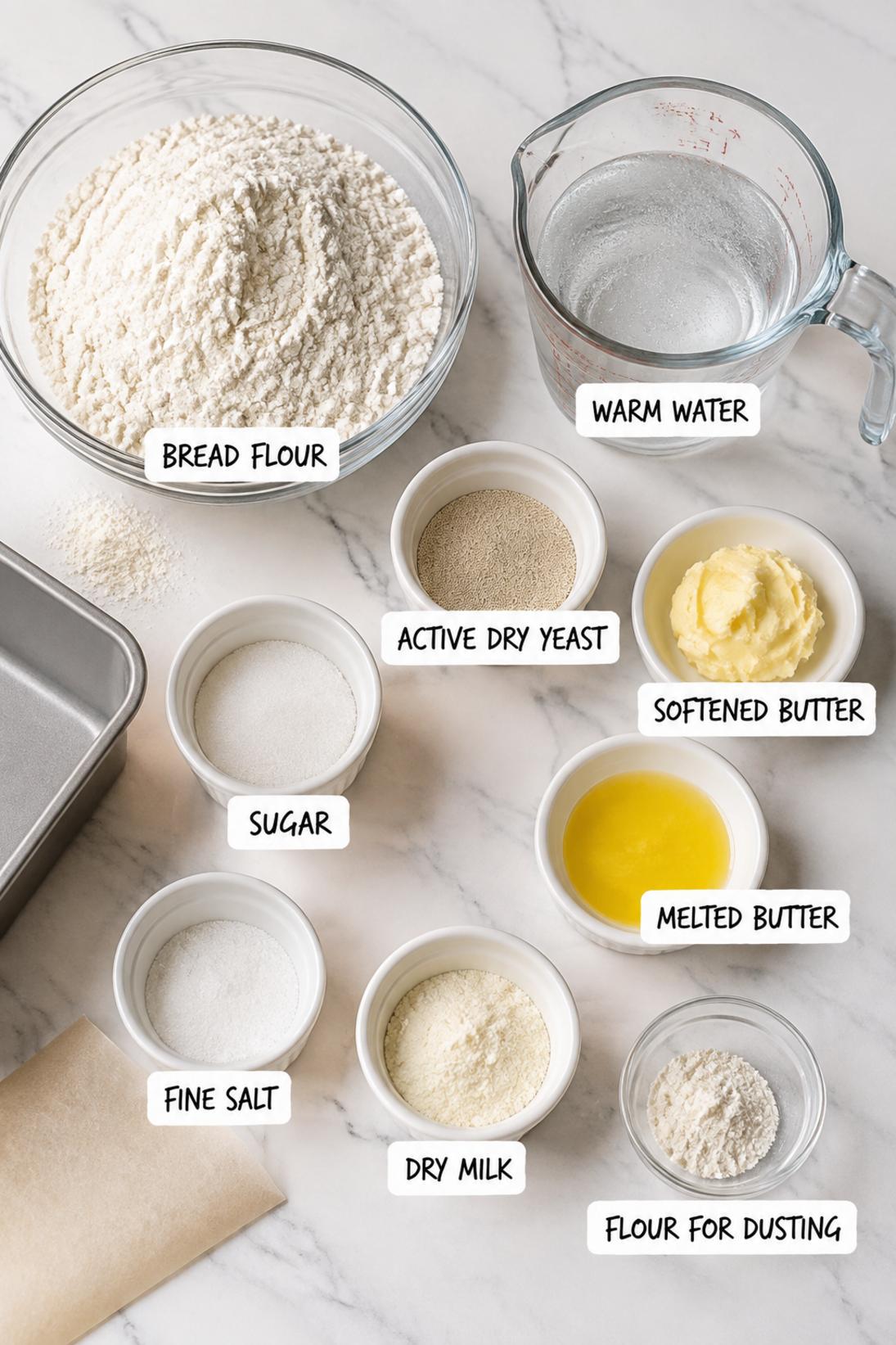
- Bread flour: I like bread flour here because it gives you that chewy, sandwich-friendly texture. All-purpose works in a pinch, but the loaf won’t have quite the same bite.
- Warm water: Warm, not hot. If it feels like a comfortable bath temp, you’re in the right zone.
- Active dry yeast: Proofing it first makes it easy to see that it’s alive and ready to go. If you’re using instant yeast, you can skip the proofing step.
- Granulated sugar or honey: Either one is fine. Sugar keeps the flavor very classic; honey gives it a slightly rounder flavor.
- Unsalted butter: Softened butter mixes in easily and helps keep the crumb tender. If your butter is salted, just go a little lighter on the added salt.
- Fine salt: Don’t skip it. Bread without enough salt tastes flat, even if everything else is right.
- Nonfat dry milk (optional): This is optional, but I like what it does for softness and that “sandwich bread” feel. If you don’t keep it around, just leave it out.
Finish
- Melted butter: Brushing the hot loaf makes the crust softer and keeps it from getting too crackly as it cools.
- Flour: Just for dusting your surface and your hands as needed. Try not to overdo it so the dough stays nicely tacky.
Recipe Instructions
- Proof the yeast: Whisk the warm water, sugar (or honey), and yeast together in a large bowl. Let it sit for 5 to 10 minutes, until it looks foamy on top.
- Add the enrichments: Mix in the softened butter, salt, and dry milk (if using) until the butter is mostly broken up and the mixture looks a little creamy.
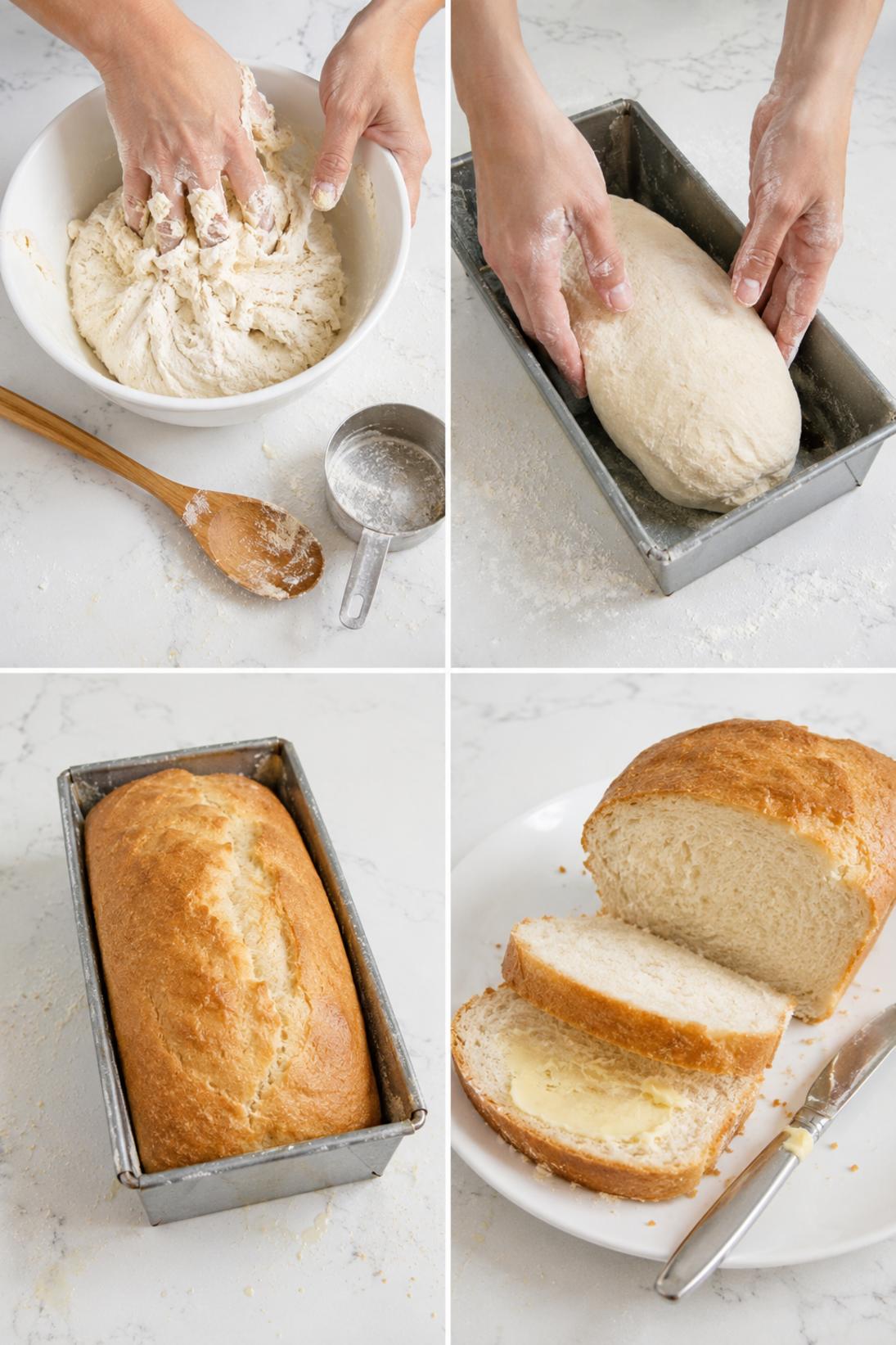
- Add the flour: Add the flour and mix until you get a shaggy dough and you don’t see dry spots of flour.
- Knead the dough: Knead for 8 to 10 minutes by hand (or 6 to 8 minutes with a mixer) until the dough is smooth, elastic, and slightly tacky but not wet.
- First rise: Place the dough in a lightly oiled bowl, cover, and let rise for 60 to 90 minutes, until doubled in size.
- Shape: Gently deflate the dough, then shape it into a tight log. Place seam-side down in a greased 9×5-inch loaf pan, or set it seam-side down on a parchment-lined sheet pan if you’re baking it free-form.
- Second rise: Cover and let rise 30 to 45 minutes, until the dough crowns about 1 inch above the rim of the pan.
- Preheat the oven: Heat the oven to 375°F. If you’re baking free-form, slash the top with a sharp knife or lame right before baking.
- Bake: Bake for 30 to 38 minutes, until deep golden and the internal temperature is 195 to 200°F.
- Finish and cool: Brush the hot loaf with melted butter. Cool in the pan for 10 minutes, then turn out and cool completely before slicing.
Some of my tips!
This is the part that really makes a difference. If you only read one section, make it this one because this is where I share the little trick that helps the recipe turn out so well.
Recipe Tips & Tricks
Pay attention to dough feel. You want it smooth and slightly tacky, not dry and stiff. If it’s sticky and smearing all over, add a little flour a tablespoon at a time as you knead.
Give it enough rise time. The clock is a guideline, but your kitchen temperature matters. I go by “doubled” on the first rise and a nice crown on the second.
Make a tight log. When shaping, a snug roll helps the loaf rise up instead of spreading out. It also gives you a nicer, more even slice.
Use a thermometer if you can. Bread can look done before the inside is fully baked. Pull it when it hits about 195 to 200°F in the center.
Butter the crust while it’s hot. If you like a softer crust for sandwiches, don’t skip the brush of melted butter right after baking.
Make some touches!
There are plenty of easy ways to serve this depending on the occasion. Keep it simple, or add a few small touches to make it feel a little more special.
Serving Suggestions
- Toast: Toast thick slices and spread with butter and jam, or honey and a pinch of salt. It’s simple and it shows off the texture.
- Sandwiches: This is great for turkey and cheddar, BLTs, or a classic ham sandwich. The loaf is sturdy enough that it doesn’t squish down too much.
- Soup night: Serve it alongside chili, tomato soup, or chicken noodle soup. I like it best cut a little thicker for dipping.
- French toast: If the loaf is a day old, it makes really good French toast. The slices hold together well and soak up custard without falling apart.
Save it for later
This section covers how to store leftovers and what parts of the recipe you can prepare ahead of time.
Storage and Make Ahead
Store the loaf wrapped at room temperature for up to 3 days. I usually wrap it tightly and keep it on the counter, away from direct sun or heat.
If you want it to last longer, freeze it sliced so you can grab what you need. Slices can go straight into the toaster, which is honestly the easiest way.
For make-ahead, you can bake the loaf, cool it completely, then freeze it the same day. Thaw at room temperature still wrapped so it doesn’t dry out.
A few quick answers
This section covers a few extra details that may help before you head to the recipe card.
Recipe FAQs
Can I use instant yeast instead of active dry yeast?
Yes. Use the same amount of instant yeast and skip the proofing step. Mix it in and keep an eye on the rise times, because instant yeast can move a little faster.
Can I use some all-purpose flour or whole wheat flour?
You can swap up to 1 cup of the bread flour with all-purpose flour for a slightly softer crumb. You can also replace up to 1 cup with whole wheat flour; I’d add 1 to 2 tablespoons extra water if the dough feels dry.
How do I know when the bread is done?
I go by color plus temperature. You want a deep golden top, and the center should read about 195 to 200°F on an instant-read thermometer.
How can I get a crisper crust?
Bake it on a preheated sheet pan and add a small pan of hot water to the oven for the first 10 minutes. Also skip the butter brush at the end if you want the crust to stay more crisp.
Why did my loaf come out dense?
The most common reason is under-rising, especially on the first rise. Give it more time, and make sure your yeast is fresh and your water isn’t too hot (hot water can slow or kill the yeast).
You might also like
Before you go, take a look at a few other recipes below the recipe card. They use similar ingredients in a different way and are worth saving too.
MORE DINNER RECIPES TO TRY


Country White Bread
INGREDIENTS
Dough
- 4 cups bread flour
- 1 1 2 cups warm water
- 2 1 4 tsp active dry yeast
- 2 tbsp granulated sugar or honey
- 2 tbsp unsalted butter softened
- 2 tsp fine salt
- 2 tbsp nonfat dry milk optional.
Finish
- 1 tbsp melted butter for brushing
- flour for dusting.
INSTRUCTIONS
Mix and knead
- whisk warm water sugar and yeast and rest 5 to 10 minutes until foamy
- mix in butter salt and optional dry milk
- add flour and mix until a shaggy dough forms
- knead 8 to 10 minutes by hand or 6 to 8 minutes with a mixer until smooth elastic and slightly tacky.
First rise and shape
- place dough in a lightly oiled bowl cover and rise 60 to 90 minutes until doubled
- gently deflate and shape into a tight log
- place seam side down in a greased 9 by 5 inch loaf pan or on a parchment lined sheet pan.
Second rise and bake
- cover and rise 30 to 45 minutes until dough crowns 1 inch above the rim
- heat oven to 375 F
- slash top if baking free form
- bake 30 to 38 minutes until deep golden and internal temperature is 195 to 200 F.
Cool and finish
- brush hot loaf with melted butter for a soft crust
- cool in pan 10 minutes then turn out and cool completely before slicing.


