

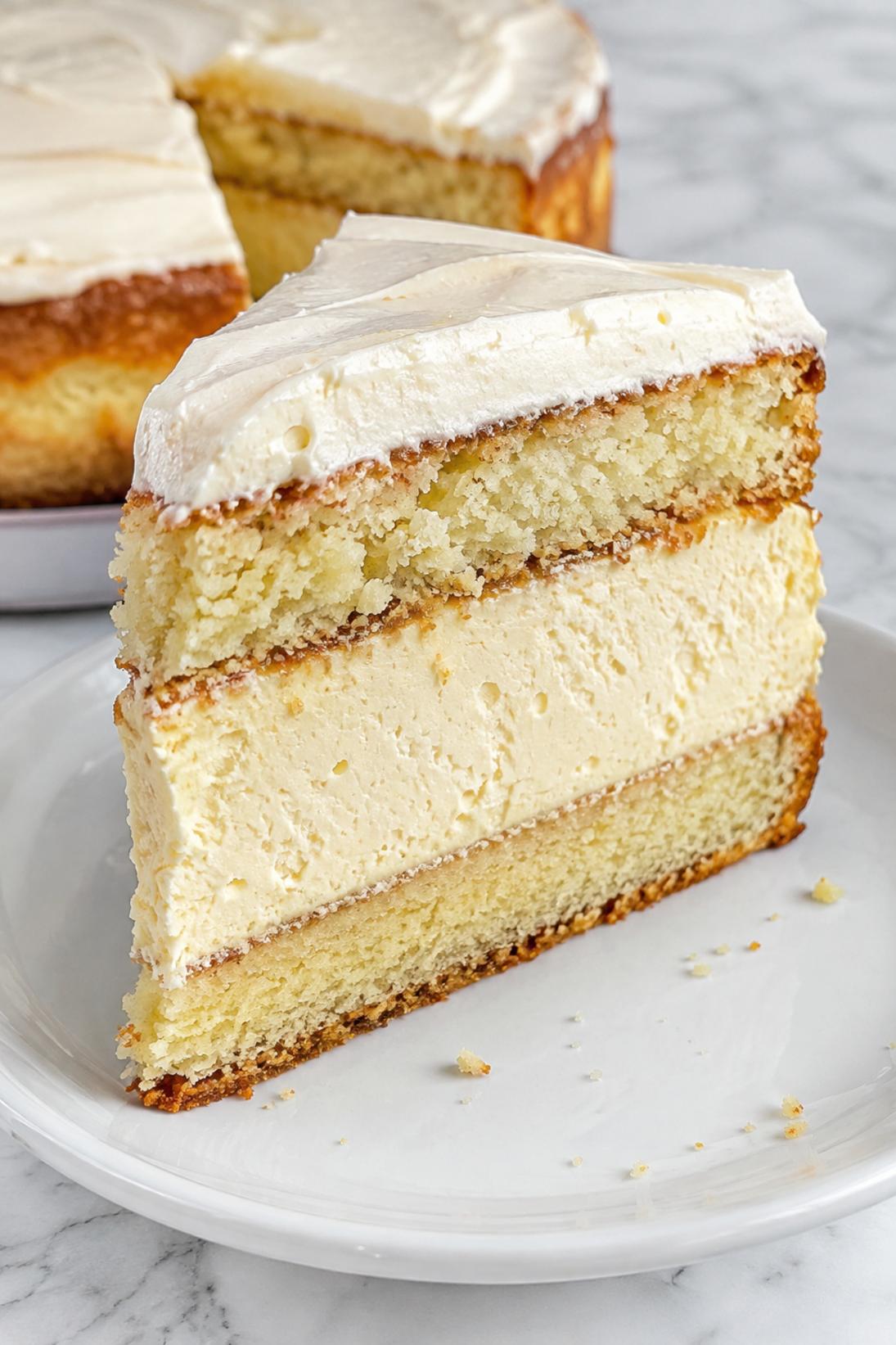
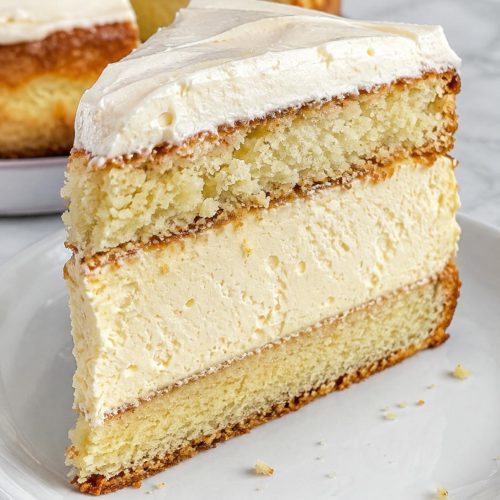
This Layered Cheesecake Cake is exactly what it sounds like: two soft vanilla cake layers with a baked cheesecake layer right in the middle, all finished with cream cheese frosting. It’s rich, tall, and very sliceable once it’s chilled.
The flavor is straight-up classic: vanilla, a little tang from the cheesecake, and that familiar cream cheese frosting on the outside. I like this version because the cheesecake layer is baked separately, so you get a real cheesecake texture instead of a soft “filling” that disappears into the cake.
I usually make this for birthdays, holiday dinners, or anytime I want a dessert that looks a little more special on the table. It’s also great with fresh berries on the plate, especially if you want something bright next to all that creaminess.
Why You’ll Love This Recipe
Real cheesecake layer: The cheesecake is baked on its own, so the middle stays creamy and distinct instead of blending into the cake.
Classic vanilla flavor: This tastes like vanilla cake and cheesecake in the most familiar, straightforward way.
Make-ahead friendly: You can bake the layers ahead and assemble later, which makes the final day feel much easier.
Clean slices: A little chill time makes a big difference here. Once it’s cold, the layers cut neatly and look great on a plate.
Great for celebrations: It’s tall and dramatic without needing fancy techniques. Cream cheese frosting hides a lot, in a good way.
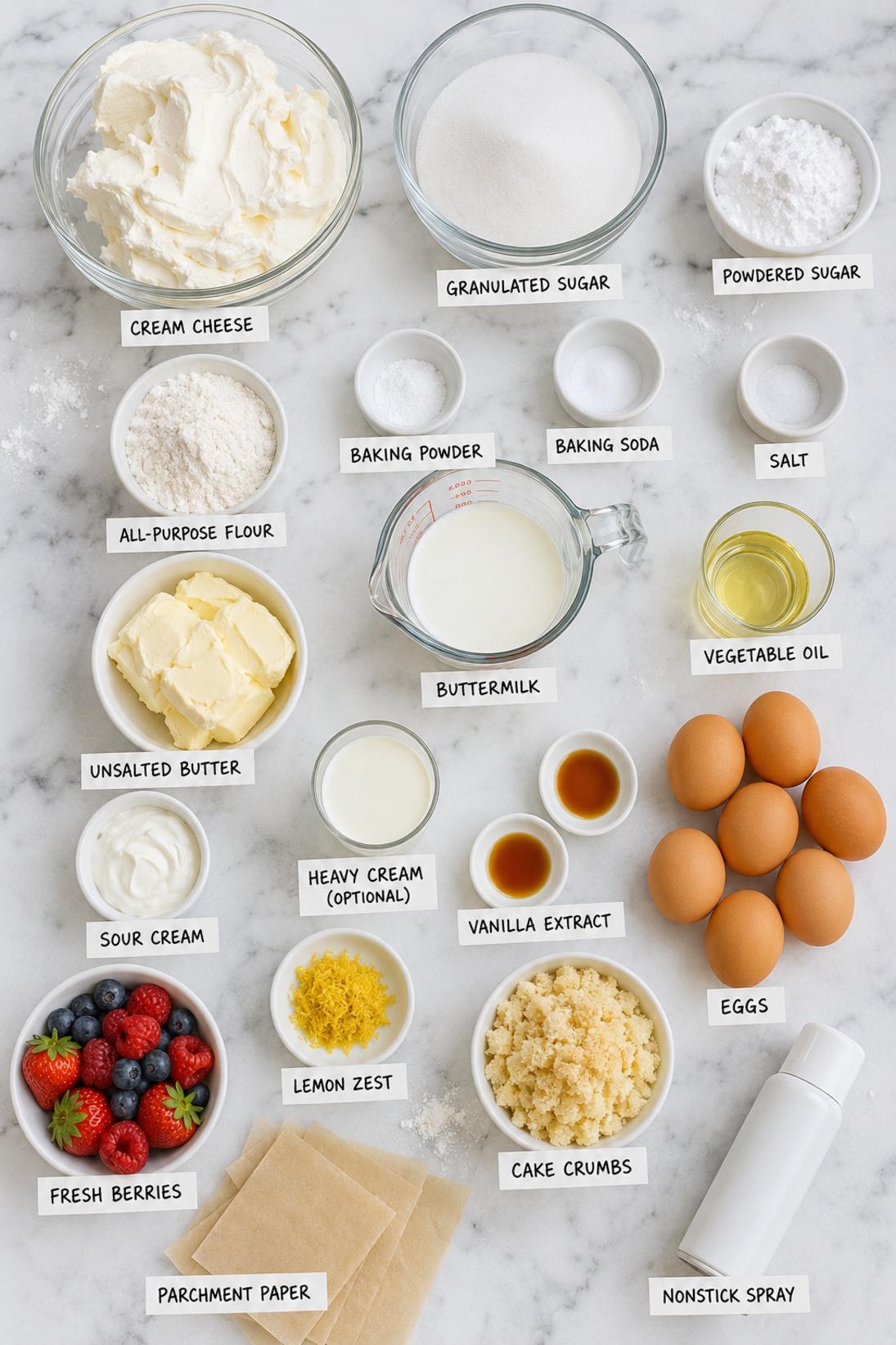
Ingredients You’ll Need
Cheesecake Layer
- Cream cheese: Use full-fat blocks if you can, not the tub kind. It makes the layer set up properly and taste like real cheesecake.
- Granulated sugar: Regular white sugar is what I use here. It dissolves easily and keeps the cheesecake flavor clean.
- Sour cream: This adds that little tang and keeps the cheesecake from tasting flat. Full-fat Greek yogurt works too if that’s what you have.
- Vanilla extract: Don’t skip it. Vanilla makes the cheesecake taste more finished and ties it to the cake layers.
- Eggs: Room temperature eggs mix in smoother. I also keep the mixer on low so I don’t whip in extra air.
- All-purpose flour: Just a little helps the cheesecake set and slice cleanly.
- Salt: A small amount makes the sweetness taste less one-note.
- Nonstick spray: Even with parchment, I still spray the pan so the edges release without drama.
- Parchment paper: This is what makes it possible to lift the cheesecake layer out nicely and keep it in one piece.
Vanilla Cake Layers
- All-purpose flour: Regular flour is perfect here. I level it when I measure so the cake doesn’t get heavy.
- Baking powder: This is the main lift for the cake layers. Make sure yours is fresh.
- Baking soda: It works with the buttermilk for a little extra rise and a softer crumb.
- Salt: Don’t skip it. It keeps the cake from tasting overly sweet.
- Unsalted butter: Softened butter creams better and gives you that classic vanilla cake texture.
- Granulated sugar: This sweetens and also helps the cake bake up light when you beat it with the butter.
- Eggs: Room temperature eggs mix in more evenly, which helps the cake bake more level.
- Vanilla extract: This is a vanilla-forward cake, so I use a good vanilla here.
- Buttermilk: Buttermilk keeps the crumb tender and gives the cake a slight tang that works really well with the cheesecake layer.
- Vegetable oil: A little oil keeps the cake moist, even after chilling.
Cream Cheese Frosting
- Cream cheese: Again, block-style cream cheese is easier to frost with. Let it fully soften so you don’t end up with lumps.
- Unsalted butter: Butter helps the frosting hold its shape and makes it taste less sharp.
- Powdered sugar: Sift it if it’s lumpy. It makes the frosting smoother and easier to spread.
- Vanilla extract: Vanilla takes the edge off the powdered sugar taste.
- Heavy cream: Optional, but useful if the frosting is too thick. Add just a splash at a time.
- Salt: A pinch helps a lot, especially with sweet frosting.
Optional Garnish
- Fresh berries: Strawberries, raspberries, or blueberries all work. I like berries best when the cake is very rich.
- Lemon zest: Just a little on top makes the whole cake taste brighter.
- Cake crumbs: Handy if you trimmed the layers. Press them around the bottom edge to make it look finished.
Recipe Instructions
- Preheat the oven: Heat the oven to 325°F. Line a 9-inch round pan with parchment paper, then spray the pan with nonstick spray.
- Beat the cream cheese: Beat the cream cheese and sugar until smooth, then mix in the sour cream and vanilla.
- Add the eggs: Add the eggs one at a time on low speed, mixing just until combined after each one.
- Add the flour: Mix in the flour and salt just until you don’t see streaks.
- Bake the cheesecake: Pour into the prepared pan and bake 40 to 50 minutes, until the edges are set and the center is slightly jiggly.
- Cool and chill: Cool the cheesecake to room temperature, then chill at least 4 hours or overnight.
- Preheat the oven: Heat the oven to 350°F. Grease and line two 9-inch round cake pans.
- Mix the dry ingredients: Whisk the flour, baking powder, baking soda, and salt together in a bowl.
- Cream the butter and sugar: Beat the butter and sugar until light and fluffy.
- Add the eggs: Beat in the eggs one at a time, then mix in the vanilla.
- Add the dry ingredients: Mix in the dry ingredients alternating with the buttermilk, just until combined.
- Add the oil: Mix in the vegetable oil just until the batter looks smooth.
- Bake the cake layers: Divide the batter between the pans and bake 22 to 28 minutes, until a toothpick comes out clean.
- Cool the cakes: Cool in the pans for 10 minutes, then turn out and cool completely.
- Make the frosting: Beat the cream cheese and butter until smooth, then gradually beat in the powdered sugar. Beat in the vanilla, salt, and enough heavy cream to make it spreadable.
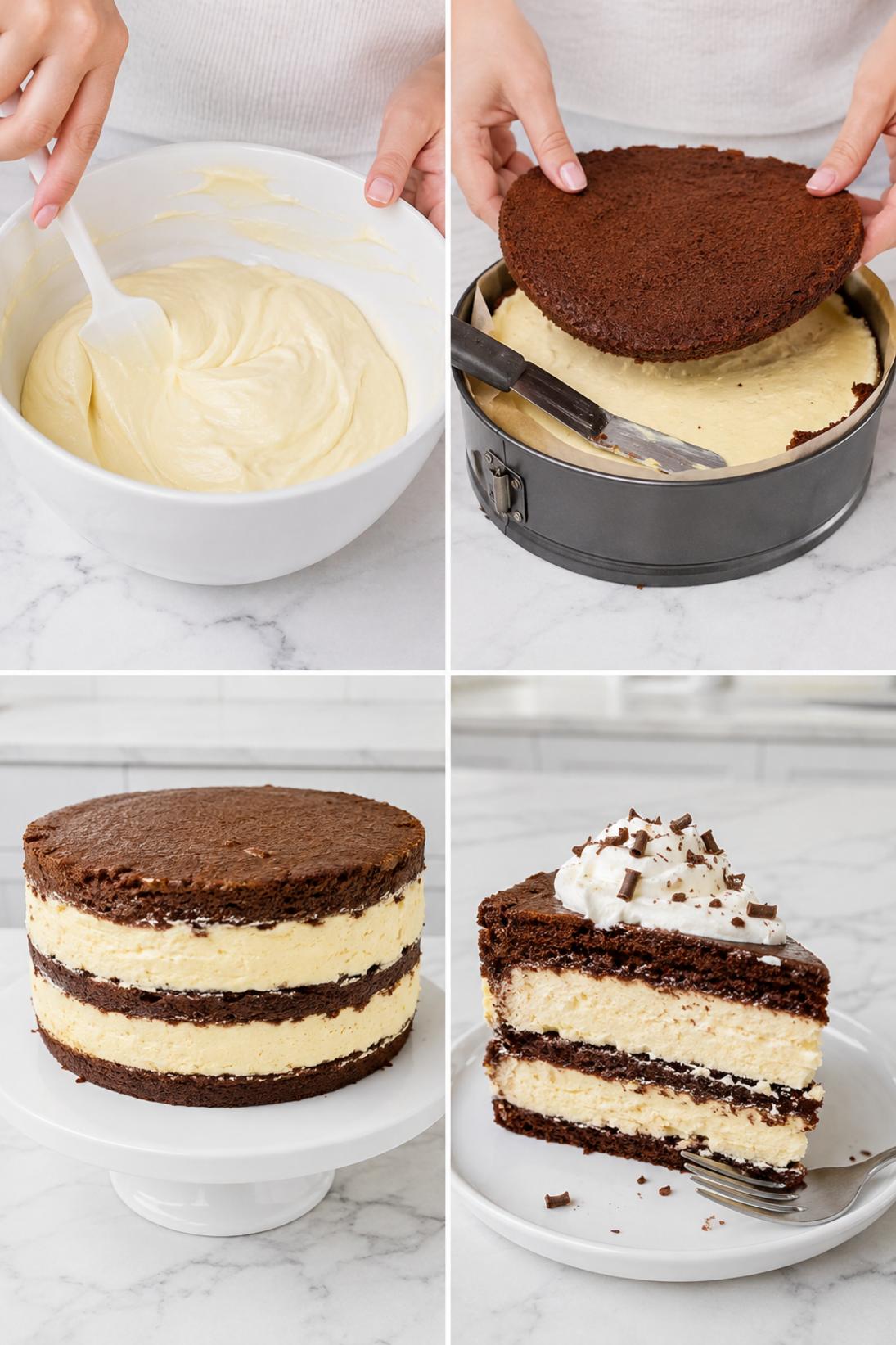
- Level the layers: Level the cake layers if needed. Remove the chilled cheesecake layer from the pan and peel off the parchment.
- Assemble the cake: Place one cake layer on a board and spread a thin layer of frosting. Add the cheesecake layer and spread a thin layer of frosting, then top with the second cake layer.
- Crumb coat: Apply a thin crumb coat, then chill the cake for 20 minutes.
- Finish and chill: Frost the cake fully and garnish as desired. Chill 30 to 60 minutes before slicing for clean layers.
Some of my tips!
This is the part that really makes a difference. If you only read one section, make it this one because this is where I share the little trick that helps the recipe turn out so well.
Recipe Tips & Tricks
Use room temperature dairy and eggs. It really does make mixing easier, especially for the cheesecake and frosting. Cold cream cheese is where most lumps come from.
Mix the cheesecake eggs on low. You’re not trying to whip anything here. Overmixing adds air, and that’s when you’re more likely to get cracks.
Don’t rush the chill time. The cheesecake layer needs time to firm up, and the assembled cake slices much cleaner once it’s cold.
Keep the frosting layers thin between cakes. A thin coat helps the layers stick and keeps the cake from sliding around when you stack it.
Slice with a hot, dry knife. Run the knife under hot water, wipe it dry, and slice. Repeat between cuts if you want super neat layers.
Make some touches!
There are plenty of easy ways to serve this depending on the occasion. Keep it simple, or add a few small touches to make it feel a little more special.
Serving Suggestions
- Fresh berries: Serve slices with strawberries or raspberries on the side. I like the fruit best when the cake is well chilled.
- Berry sauce: A quick raspberry or strawberry sauce is nice if you want something a little looser than whole fruit. Even a spoonful of jam warmed up works.
- Coffee: This is really good with coffee, especially if you keep the frosting fairly simple. I usually go with a plain drip coffee or an americano.
- Lemon zest: Add a little lemon zest over each slice right before serving. It’s a small thing, but it perks up the whole plate.
Save it for later
This section covers how to store leftovers and what parts of the recipe you can prepare ahead of time.
Storage and Make Ahead
Store leftovers covered in the fridge for up to 4 days. This cake holds up well cold, and the layers stay neat when you slice it straight from the fridge.
You can make this recipe ahead by baking the cheesecake layer and cake layers a day early. Keep everything wrapped and chilled, then frost and assemble the next day.
Freeze individual portions if you want to stash a few slices. Wrap them well, then thaw in the fridge overnight before serving.
A few quick answers
This section covers a few extra details that may help before you head to the recipe card.
Recipe FAQs
How do I know the cheesecake layer is done?
I look for set edges and a center that still has a slight jiggle. If the whole thing looks loose and wavy, it needs more time.
Can I use Greek yogurt instead of sour cream?
Yes. Full-fat plain Greek yogurt works well in the cheesecake layer and tastes very similar. I wouldn’t use flavored yogurt here.
Do I have to level the cake layers?
No, but it helps the cake stack straight. If your layers domed a lot, trimming just a little off the top makes assembly easier.
Why is my cream cheese frosting runny?
Usually the cream cheese was too warm or the butter was overly soft. Chill the frosting for a bit, then beat it again, and go easy on the heavy cream if you’re adding it.
How do I get cleaner slices?
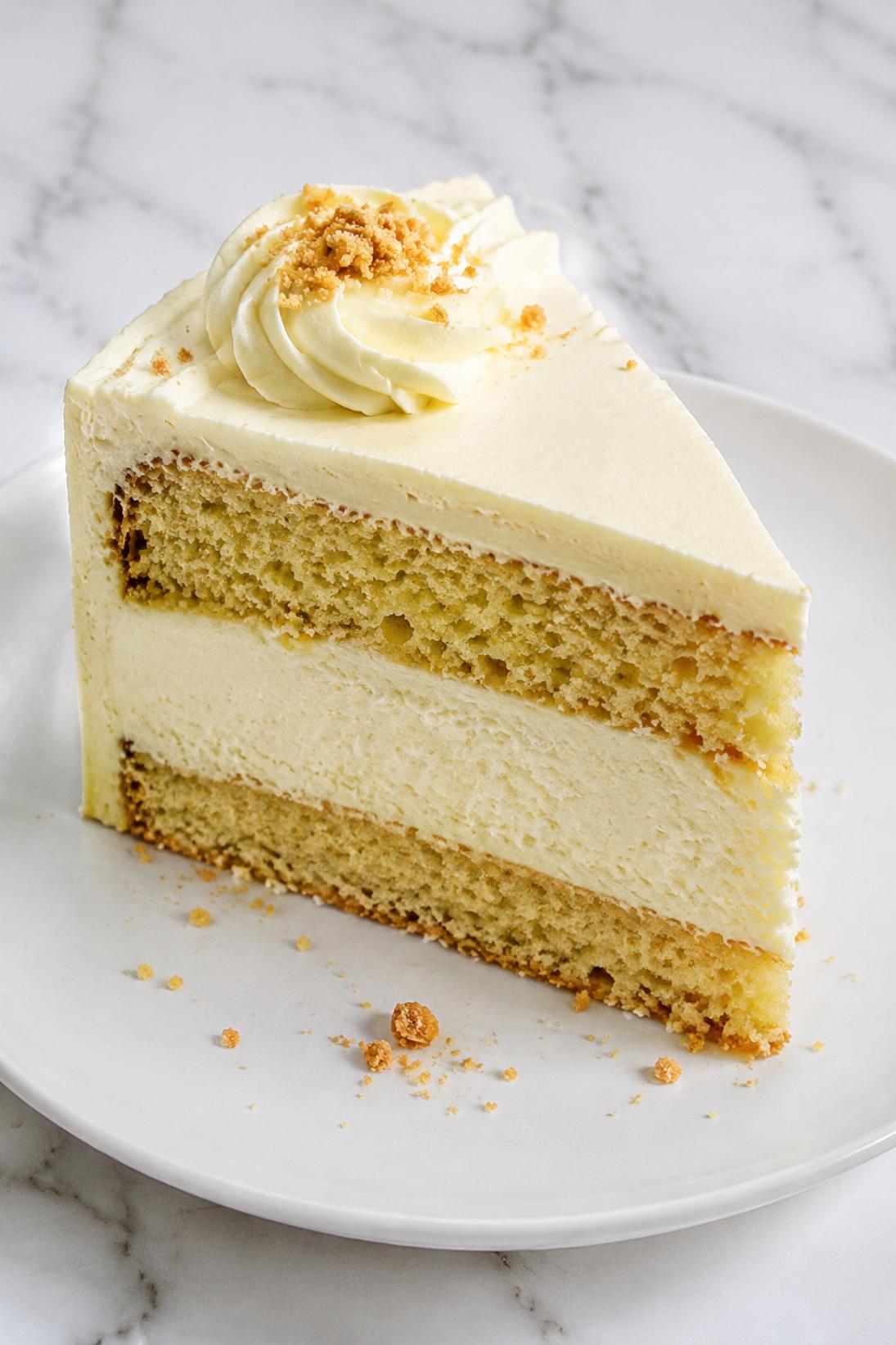
Chill the assembled cake, then cut with a hot, dry knife. If you want really sharp layers, pop the cake in the freezer for about 20 minutes before slicing.
You might also like
Before you go, take a look at a few other recipes below the recipe card. They use similar ingredients in a different way and are worth saving too.
MORE DINNER RECIPES TO TRY


Layered Cheesecake Cake
INGREDIENTS
Cheesecake Layer
- 24 oz cream cheese softened
- 3/4 cup granulated sugar
- 1/4 cup sour cream
- 1 tsp vanilla extract
- 3 large eggs room temperature
- 1 tbsp all purpose flour
- 1/4 tsp salt
- nonstick spray
- parchment paper.
Vanilla Cake Layers
- 2 1/2 cups all purpose flour
- 2 1/2 tsp baking powder
- 1/2 tsp baking soda
- 1/2 tsp salt
- 3/4 cup unsalted butter softened
- 1 3/4 cups granulated sugar
- 4 large eggs room temperature
- 1 tbsp vanilla extract
- 1 cup buttermilk room temperature
- 1/4 cup vegetable oil.
Cream Cheese Frosting
- 16 oz cream cheese softened
- 1/2 cup unsalted butter softened
- 4 cups powdered sugar sifted
- 2 tsp vanilla extract
- 1 tbsp heavy cream optional
- pinch of salt.
Optional Garnish
- fresh berries
- lemon zest
- cake crumbs.
INSTRUCTIONS
Cheesecake Layer
- Heat oven to 325 F and line a 9 inch round pan with parchment and spray
- beat cream cheese and sugar until smooth then mix in sour cream and vanilla
- add eggs one at a time on low just until combined then mix in flour and salt
- pour into pan and bake until edges are set and center is slightly jiggly about 40 to 50 minutes
- cool to room temperature then chill at least 4 hours or overnight.
Vanilla Cake Layers
- Heat oven to 350 F and grease and line two 9 inch round pans
- whisk flour baking powder baking soda and salt
- beat butter and sugar until light then beat in eggs one at a time and vanilla
- mix in dry ingredients alternating with buttermilk then mix in oil just until smooth
- divide batter between pans and bake until a toothpick comes out clean about 22 to 28 minutes
- cool 10 minutes then turn out and cool completely.
Cream Cheese Frosting
- Beat cream cheese and butter until smooth then gradually beat in powdered sugar
- beat in vanilla salt and enough cream to reach a spreadable consistency.
Assembly
- Level cake layers if needed and remove cheesecake from pan and parchment
- place one cake layer on a board and spread a thin layer of frosting
- add the chilled cheesecake layer and spread a thin layer of frosting
- top with second cake layer and apply a thin crumb coat then chill 20 minutes
- frost the cake fully and garnish as desired
- chill 30 to 60 minutes before slicing for clean layers.


