

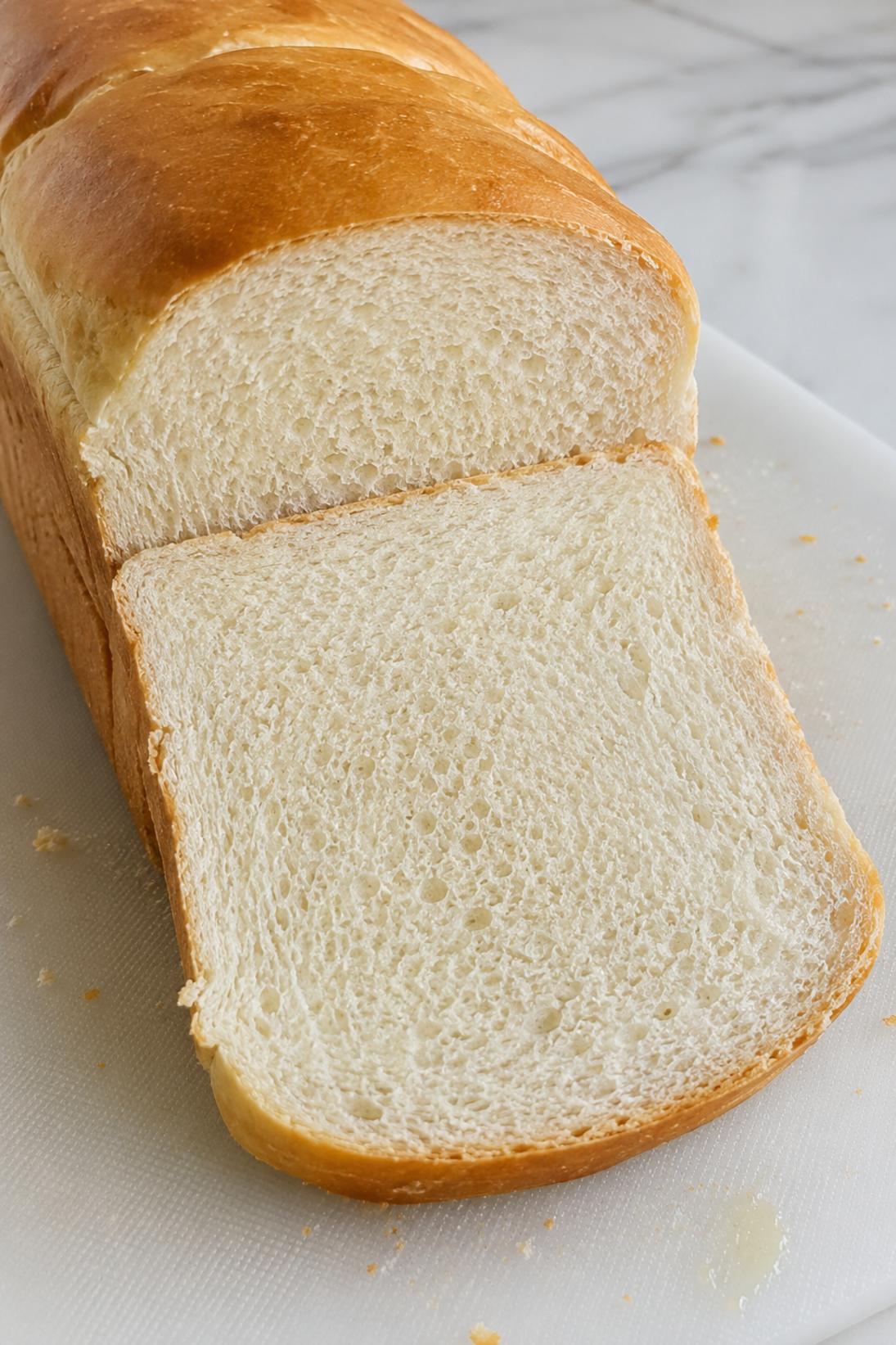
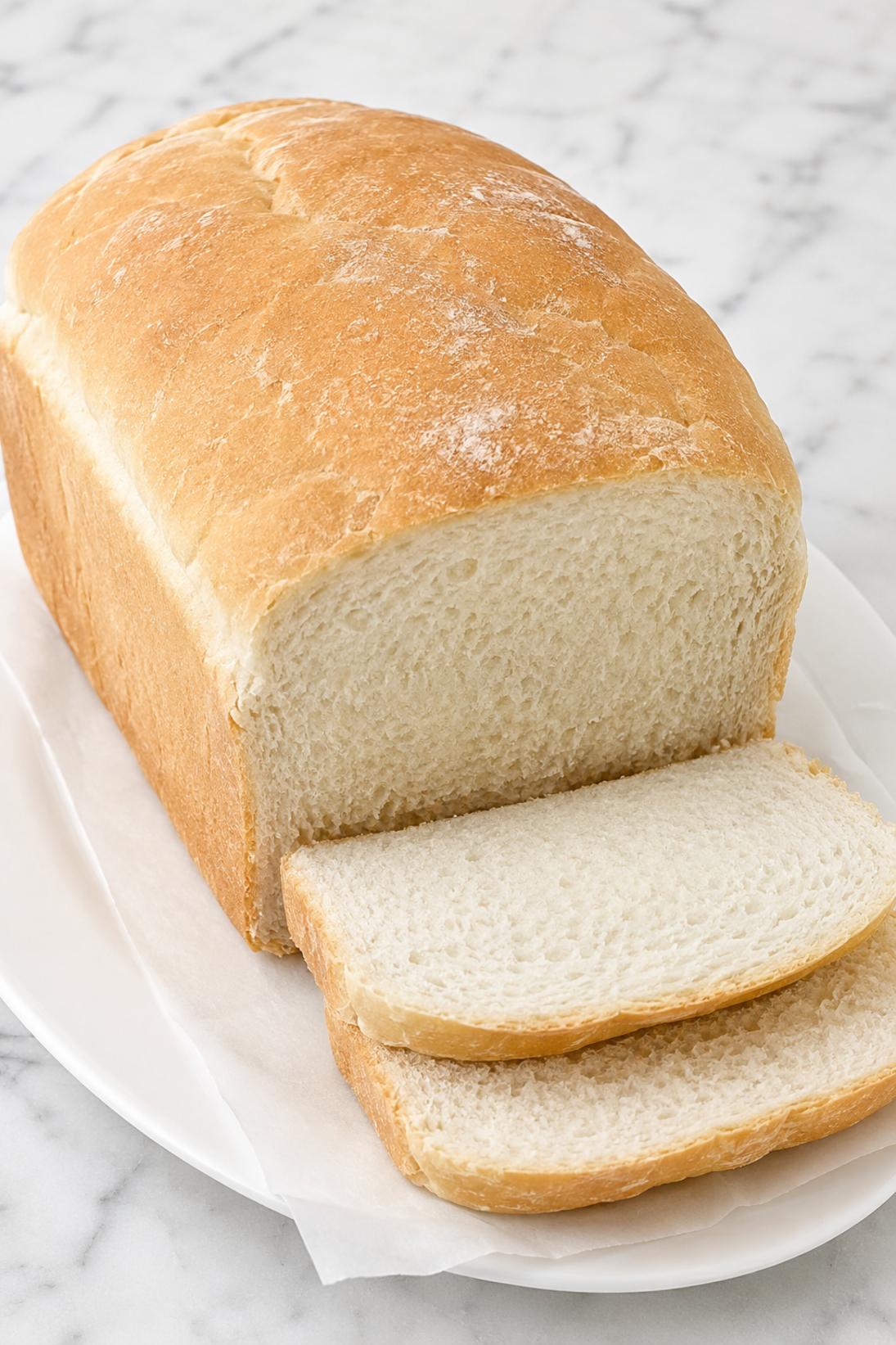
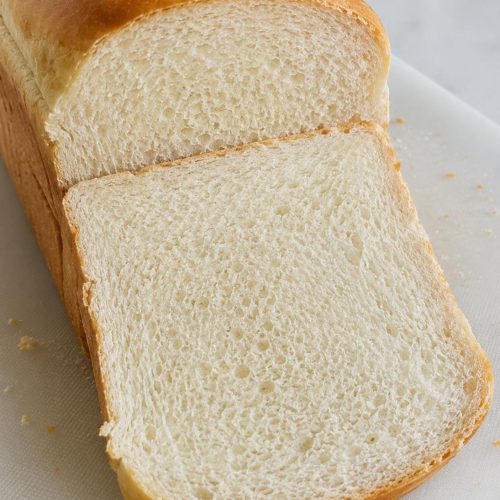
Old-Fashioned White Loaf is the kind of classic white sandwich bread I keep coming back to when I want something simple that works for everything. It has a tender, soft crumb, a thin golden crust, and slices that hold up well for sandwiches without feeling heavy.
I like that this loaf tastes clean and mild, the way good white bread should. It’s soft enough for toast, but it still has a little structure, so it doesn’t crumble when you spread butter or make a grilled cheese.
For me, this is the loaf I make for weekday lunches, PB&J, and basic morning toast. It’s also really nice for simple things like egg salad, tuna melts, or a warm slice with soup.
Why You’ll Love This Recipe
Reliable loaf: The dough is easy to handle, and the rise times are pretty predictable, even if you’re newer to yeast bread.
Soft sandwich slices: You get that classic, even crumb that makes neat slices for lunchbox sandwiches and toast.
Simple pantry ingredients: Nothing unusual here. It’s the kind of recipe you can make without a special trip to the store.
Not too rich: The flavor stays clean and classic, so it works with sweet or savory toppings.
Easy to tweak: You can make it a little softer, a little richer, or use bread flour if that’s what you keep around.
Ingredients You’ll Need
Yeast Mixture
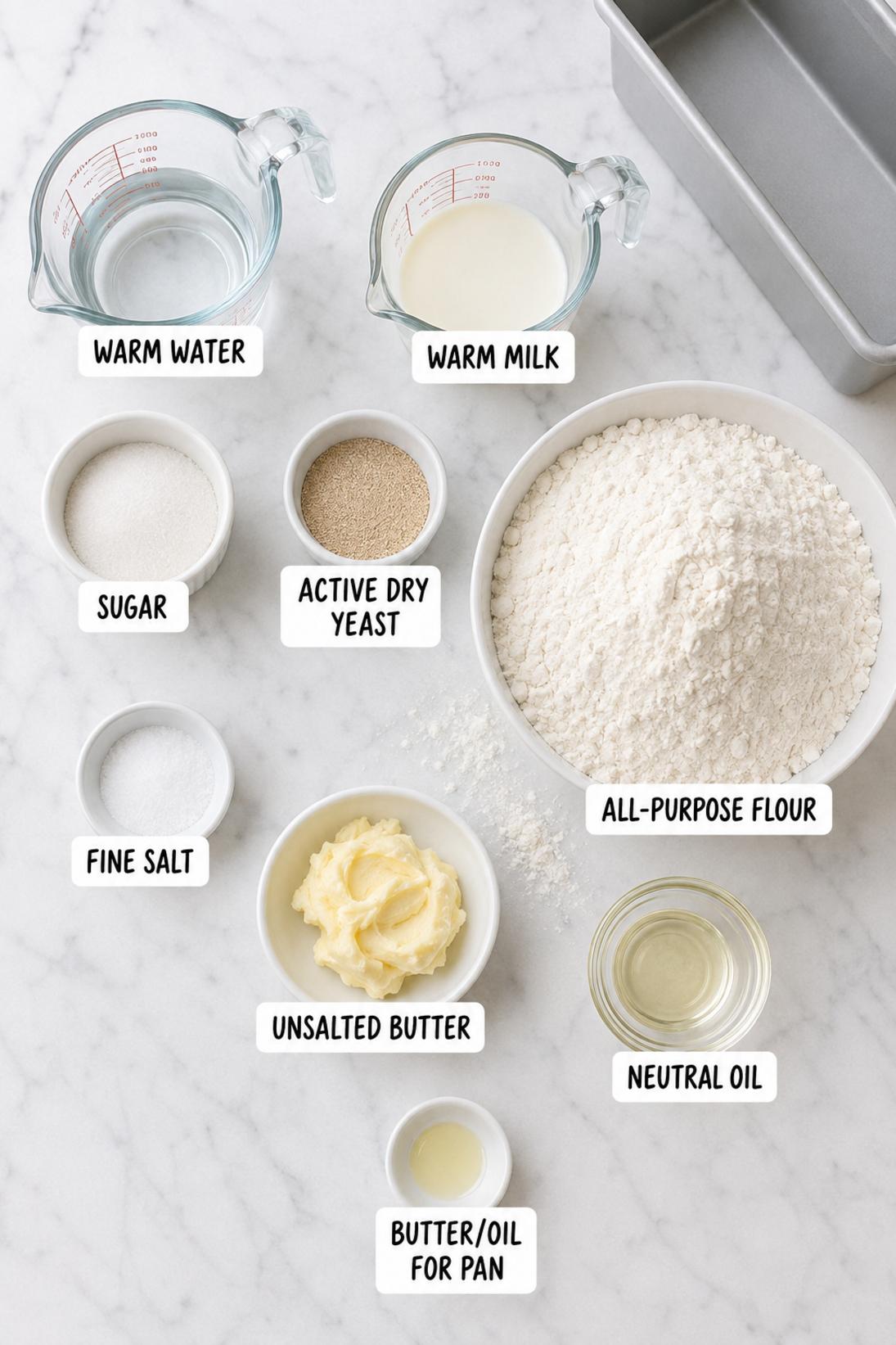
- Warm water: I keep it warm, not hot. If it feels uncomfortably hot on your wrist, it’s too hot for the yeast.
- Warm milk: This helps the loaf bake up softer. Whole milk is great, but any milk you have is fine.
- Granulated sugar: This gives the yeast a little boost and helps the crust brown nicely.
- Active dry yeast: Make sure it’s not expired. If it doesn’t foam in the bowl, start over with fresh yeast.
Dough
- All-purpose flour: I use regular AP flour for this, and it makes a nice, classic crumb. Bread flour works too (you may need a splash more liquid).
- Fine salt: Don’t skip it. It keeps the loaf from tasting flat and helps the dough feel more “finished.”
- Unsalted butter: Softened butter mixes in more easily and gives you that gentle, old-school softness in the crumb.
- Neutral oil: This helps keep the loaf tender and makes the slices stay soft for sandwiches.
For Pan
- Butter or oil: Just enough to keep the loaf from sticking. I usually use butter because it’s easy, but oil works the same.
Recipe Instructions
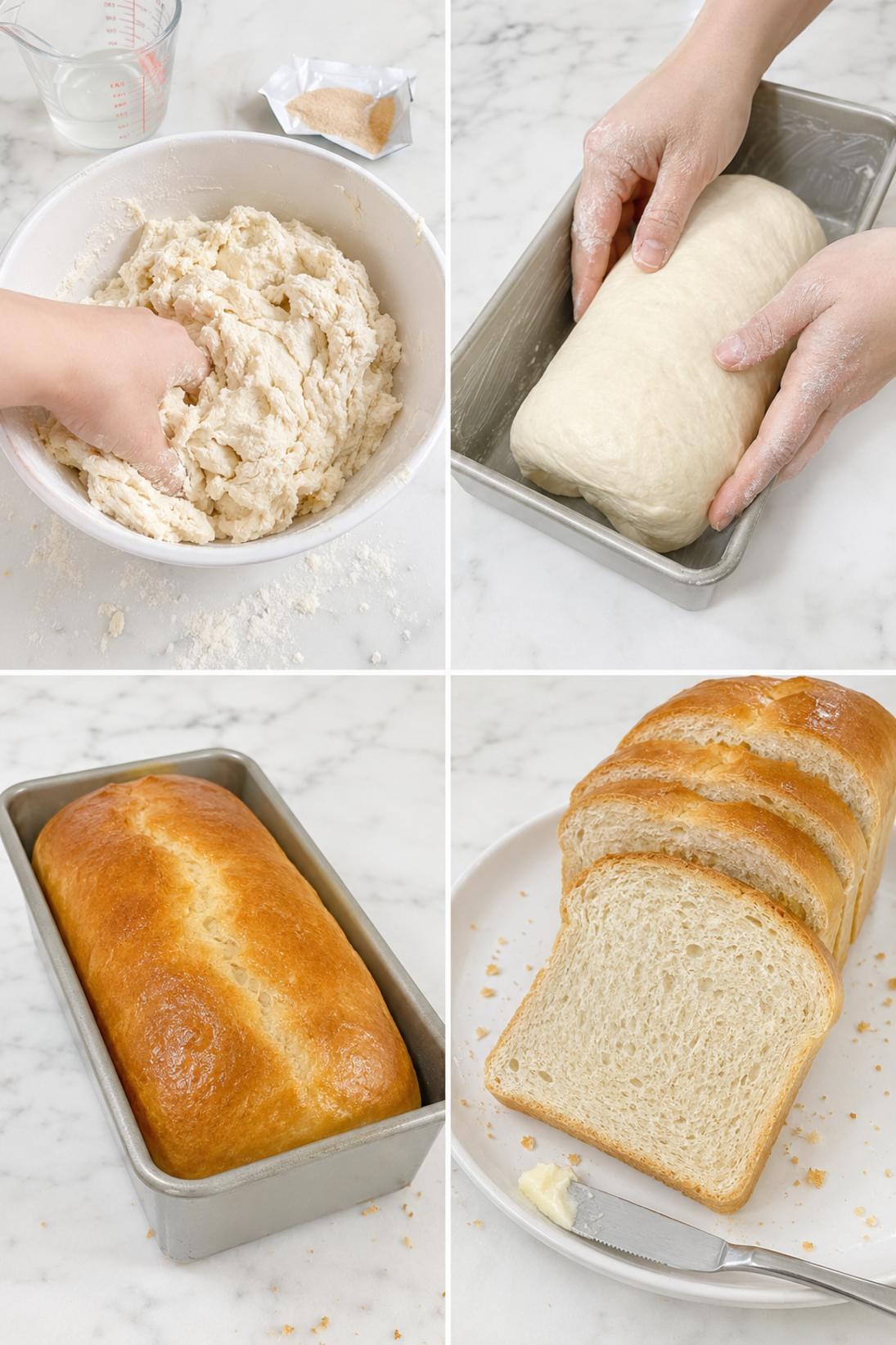
- Activate yeast: Combine the warm water, warm milk, sugar, and yeast in a large bowl. Let it sit until foamy, about 5 to 10 minutes.
- Add flour and salt: Stir in 2 cups of the flour and the salt until you have a thick, shaggy mixture.
- Add fats: Add the softened butter and oil, then mix until the butter is mostly worked in (a few small pieces are fine at first).
- Finish the dough: Mix in the remaining flour until a soft dough forms. If it’s very sticky, add more flour 1 tablespoon at a time, just until it’s workable.
- Knead: Knead by hand or with a mixer until the dough is smooth and elastic, about 8 to 10 minutes.
- First rise: Place the dough in a lightly oiled bowl, cover, and let rise until doubled, about 60 to 75 minutes.
- Shape: Grease a 9×5 inch loaf pan. Press the dough into a rectangle, roll it up tightly into a log, pinch the seam closed, and tuck the ends under.
- Second rise: Place the dough seam-side down in the pan, cover, and let rise until it crowns about 1 inch above the rim, about 35 to 50 minutes.
- Bake: Bake at 375°F until deep golden and the loaf sounds hollow, or until it reaches 195 to 200°F inside, about 30 to 35 minutes. If it’s browning too fast, tent loosely with foil.
- Cool: Cool 10 minutes in the pan, then turn the loaf out and cool completely before slicing.
Some of my tips!
This is the part that really makes a difference. If you only read one section, make it this one because this is where I share the little trick that helps the recipe turn out so well.
Recipe Tips & Tricks
Watch the dough, not the clock. Rise times can swing depending on how warm your kitchen is. I go by “doubled” for the first rise and “about 1 inch over the rim” for the second.
Keep the dough soft. It should feel slightly tacky but not gluey. If you add too much flour, the loaf can bake up a little dry.
Roll it tighter than you think. A snug roll helps you get a taller loaf with a nicer slice, and it helps prevent big gaps or tunneling.
Use the thermometer if you have one. I like pulling this loaf around 195 to 200°F in the center. It takes the guesswork out, especially with new ovens.
Let it cool before slicing. It’s tempting, but slicing too soon can make the crumb gummy and the slices a little squished.
Make some touches!
There are plenty of easy ways to serve this depending on the occasion. Keep it simple, or add a few small touches to make it feel a little more special.
Serving Suggestions
- Toast: Slice it a little thick and toast until just golden. I usually do butter and a pinch of salt, or jam if I want it sweet.
- Sandwiches: This is great for turkey and cheddar, ham and mustard, or a simple BLT. The slices stay soft but don’t fall apart.
- Grilled cheese: White bread is my favorite for grilled cheese because it browns evenly. Add tomato soup on the side if you want a full meal.
- French toast: Use slightly thicker slices and soak just long enough to coat. It cooks up soft inside with crisp edges.
Save it for later
This section covers how to store leftovers and what parts of the recipe you can prepare ahead of time.
Storage and Make Ahead
Store the loaf wrapped at room temperature for up to 3 days. I wrap it tightly so the cut side doesn’t dry out, and I keep it out of the fridge (the fridge makes bread stale faster).
If you want it to last longer, freeze it sliced so you can grab what you need. I separate slices with a little parchment if I’m being careful, but most of the time I just freeze the stack and peel off slices as needed.
Thaw at room temperature for about 20 to 30 minutes, or toast straight from frozen. Toasting brings back the soft-inside, crisp-outside texture really well.
You can also freeze the whole loaf, wrapped well. Let it thaw on the counter still wrapped so condensation stays on the wrap, not the bread.
A few quick answers
This section covers a few extra details that may help before you head to the recipe card.
Recipe FAQs
Can I use instant yeast instead of active dry yeast?
Yes. Use the same amount of instant yeast, and you can mix it directly into the flour instead of blooming it first. Still use warm liquids so the dough gets going quickly.
How do I know when the loaf is done baking?
The easiest way is an instant-read thermometer: aim for 195 to 200°F in the center of the loaf. You can also tap the bottom of the loaf and listen for a hollow sound, but the thermometer is more reliable.
My dough feels sticky. Should I add more flour?
Add flour slowly, about 1 tablespoon at a time, and stop as soon as it’s workable. A slightly tacky dough usually bakes up softer than a stiff, heavily floured dough.
Can I make this loaf richer and more tender?
You can add 1 egg and reduce the milk by 2 tablespoons. That version is a little softer and more “enriched,” and it’s really nice for toast.
Can I use bread flour?
Yes, bread flour works here. The dough may feel a little tighter, so add 1 to 2 tablespoons extra liquid if needed, and go by how the dough feels as you knead.
You might also like
Before you go, take a look at a few other recipes below the recipe card. They use similar ingredients in a different way and are worth saving too.
MORE DINNER RECIPES TO TRY

Old-Fashioned White Loaf
INGREDIENTS
Yeast Mixture
- 3/4 cup warm water
- 1/2 cup warm milk
- 2 1/4 tsp active dry yeast
- 2 tbsp granulated sugar.
Dough
- 3 1/2 cups all-purpose flour
- 1 1/2 tsp fine salt
- 3 tbsp unsalted butter softened
- 1 tbsp neutral oil.
For Pan
- 1 tsp butter or oil for greasing.
INSTRUCTIONS
Activate Yeast
- Combine warm water
- warm milk
- sugar
- and yeast
- rest until foamy about 5 to 10 minutes.
Mix And Knead
- Stir in 2 cups flour and salt
- add softened butter and oil
- mix in remaining flour until a soft dough forms
- knead by hand or mixer until smooth and elastic about 8 to 10 minutes
- add 1 tbsp flour at a time only if sticky.
First Rise
- Place dough in a lightly oiled bowl
- cover
- rise until doubled about 60 to 75 minutes.
Shape And Second Rise
- Grease a 9x5 inch loaf pan
- press dough into a rectangle
- roll tightly into a log
- pinch seam and tuck ends
- place seam-side down in pan
- cover and rise until dough crowns 1 inch above pan rim about 35 to 50 minutes.
Bake And Cool
- Bake at 375 F until deep golden and loaf sounds hollow or reaches 195 to 200 F internal temperature about 30 to 35 minutes
- optionally tent with foil if browning fast
- cool 10 minutes in pan then turn out and cool completely before slicing.


