

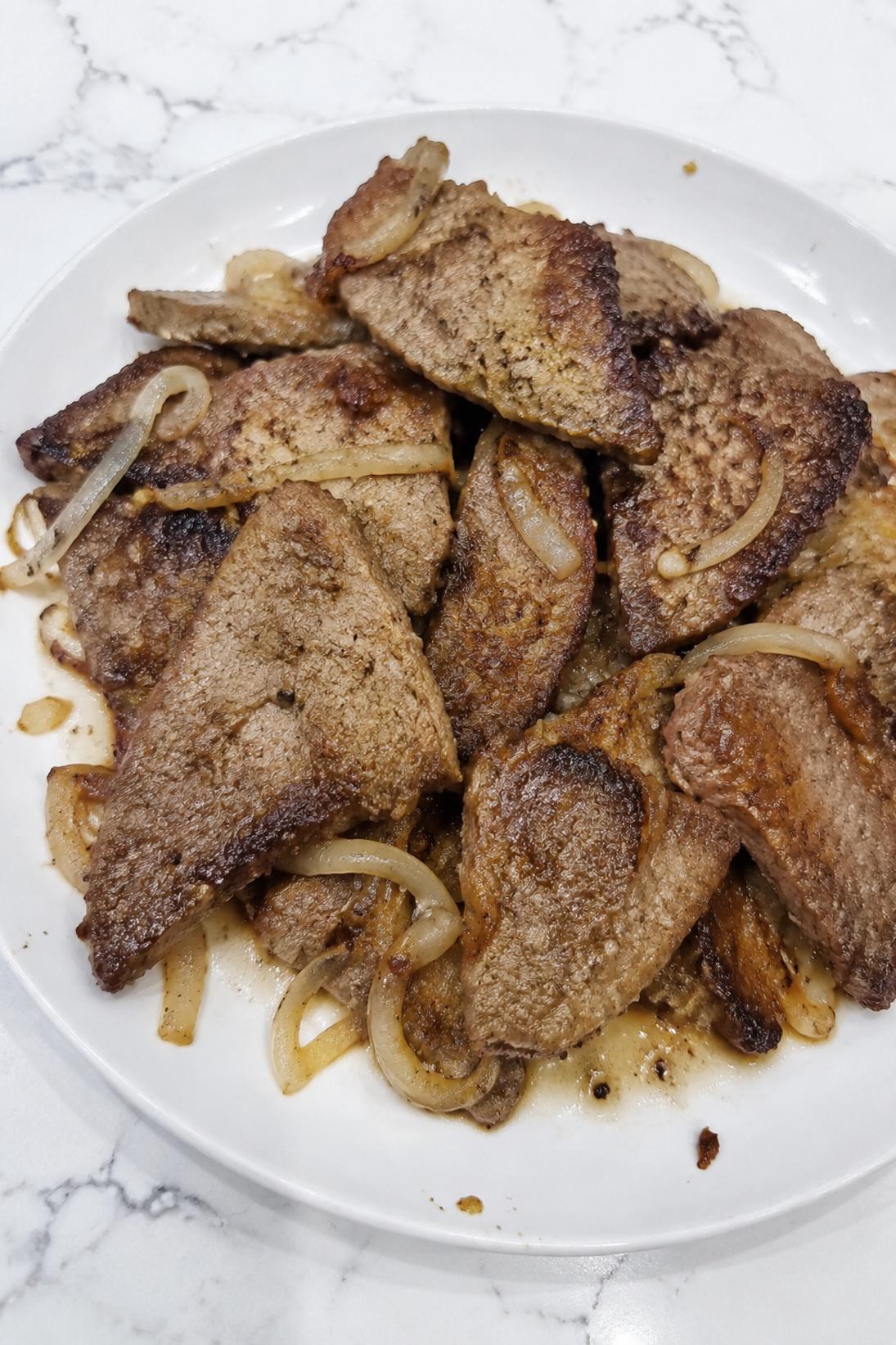
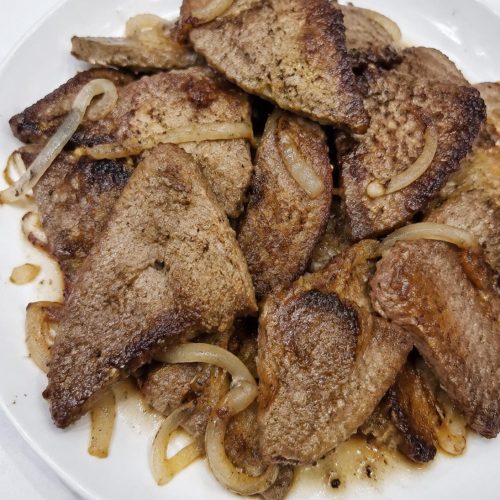
Pan-Fried Liver with onions is one of those old-school dinners that still holds up when it’s done right. You get a deep, savory flavor, tender slices, and sweet onions all in the same skillet. I like it when I want something simple and hearty that doesn’t take all night.
My take keeps the liver mild and tender by soaking it first, then giving it a quick sear so it stays slightly pink in the middle. The seasoned flour adds that classic crust, and the onions make the whole plate taste more balanced. I also love that you can make a quick pan sauce with just a splash of broth and Worcestershire.
This is especially good with mashed potatoes, rice, or buttered noodles, because the onions and juices have somewhere to go. For me it’s a great weeknight dinner when I’m craving something cozy and straightforward.
Why You’ll Love This Recipe
Quick skillet dinner: Once the prep is done, the cooking goes fast, so you’re not standing at the stove forever.
Tender, not tough: This method keeps the liver browned on the outside but still soft inside, which is the difference between good liver and chewy liver.
Classic onion topping: The onions cook down sweet and silky, and they make every bite taste more balanced.
Simple pantry dredge: The seasoned flour gives you that traditional crust without needing anything fancy.
Easy pan gravy option: If you like more sauce, the little broth-and-Worcestershire finish pulls up all the browned bits in the skillet.
Ingredients You’ll Need
Liver Prep
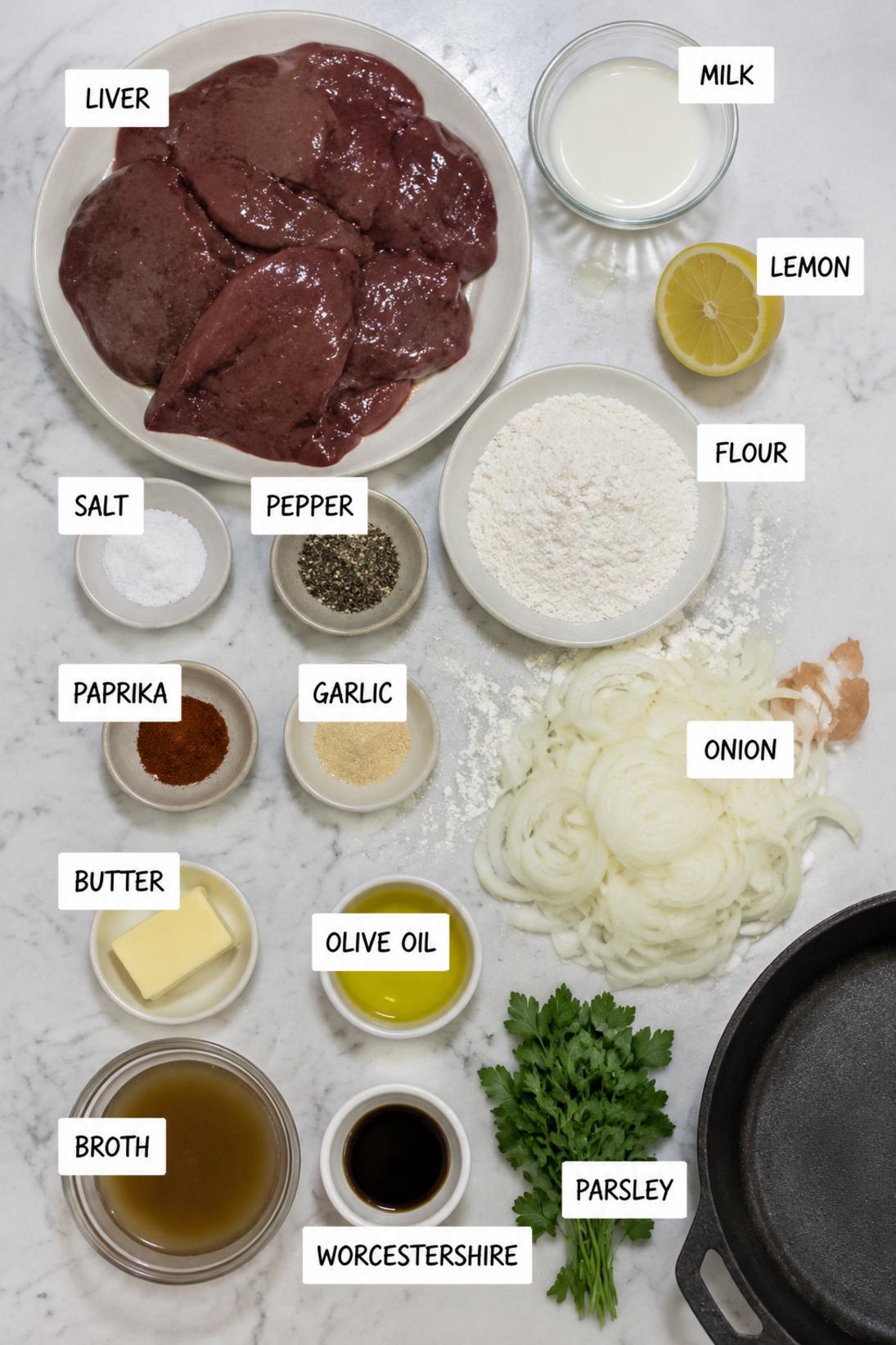
- Beef liver: I look for slices that are evenly cut so they cook at the same rate. If you can, ask the butcher to slice it, or slice it at home once it’s very cold.
- Milk: This is optional, but I usually do it because it takes the edge off and helps the texture. Whole milk is nice here, but whatever you have works.
- Lemon juice: Also optional, but a little splash in the milk helps mellow the flavor even more. Don’t overthink it.
- Salt: Seasoning matters with liver, so I salt it like I would any other meat. I do the final salt check at the end too.
Seasoned Dredge
- All-purpose flour: Regular flour is what I use for that classic light coating. It browns quickly, so keep an eye on the heat.
- Kosher salt: This seasons the crust so the liver doesn’t taste flat. If you’re using table salt, use a lighter hand.
- Black pepper: Freshly ground is best, but pre-ground is fine. Pepper goes really well with the onions.
- Paprika: This adds color and a little warmth. Smoked paprika is fine too if that’s what you keep around.
- Garlic powder: Optional, but I like it in the dredge for a little more savory flavor. Go easy so it doesn’t taste dusty.
Pan Fry and Onions
- Yellow onion: Yellow onions turn sweet and soft in the skillet. Slice them thin so they cook down in the same time the liver needs.
- Unsalted butter: Butter gives you the best flavor with liver and onions. If you only have salted butter, just hold back a bit on the salt until the end.
- Olive oil: I like mixing oil with butter so the butter doesn’t burn as fast. Any neutral cooking oil works too.
- Beef broth: Optional, but it’s the easiest way to get a little pan sauce for serving. Low-sodium is helpful since the dredge is already seasoned.
- Worcestershire sauce: Optional, but it gives the sauce a deeper, savory taste. A small amount goes a long way.
Finish
- Fresh parsley: This is just a simple fresh finish. It cuts the richness and makes the plate look nicer without doing much work.
Recipe Instructions
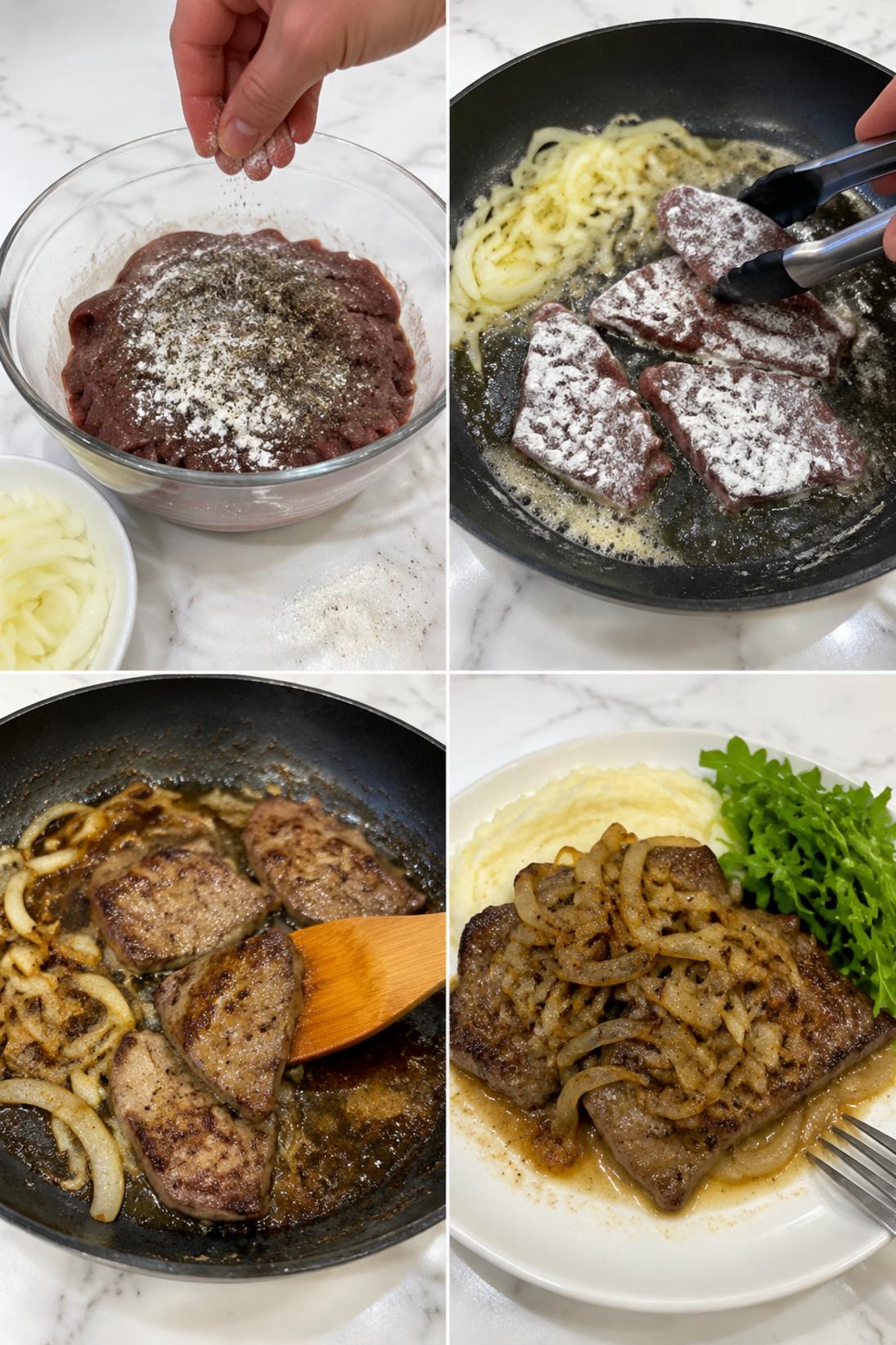
- Soak the liver: If you’re soaking, put the liver in a bowl with milk (and lemon juice if using) for about 30 minutes, then drain and pat very dry.
- Trim and cut: Trim off any visible membrane, then cut the liver into even pieces so it cooks at the same rate.
- Mix the dredge: Stir the flour, salt, pepper, paprika, and garlic powder (if using) together in a shallow dish.
- Dredge the liver: Lightly coat the liver in the seasoned flour, then shake off the excess so it doesn’t get heavy in the pan.
- Slice the onion: Thinly slice the onion and set it aside so it’s ready to go.
- Cook the onions: Heat the butter and olive oil in a large skillet over medium-high heat until shimmering, then add the onions and cook, stirring, until softened and lightly browned, about 5 to 7 minutes. Push them to the edges of the skillet.
- Sear the liver: Add the liver in a single layer and cook just until browned on the outside and slightly pink in the center, about 2 to 3 minutes per side.
- Rest the liver: Transfer the liver to a plate and tent loosely with foil to rest.
- Make the pan sauce: If using, add the beef broth and Worcestershire sauce to the skillet and simmer for 1 to 2 minutes, scraping up the browned bits, then return the onions and any juices.
- Warm and serve: Return the liver to the skillet just to warm through, 30 to 60 seconds, then remove from heat. Taste and adjust salt and pepper, top with onions and pan juices, and finish with parsley.
Some of my tips!
This is the part that really makes a difference. If you only read one section, make it this one because this is where I share the little trick that helps the recipe turn out so well.
Recipe Tips & Tricks
Don’t overcook the liver. I pull it when it’s browned outside but still a little pink in the center. If you cook it until it’s fully gray all the way through, it gets grainy and tough fast.
Get it really dry after soaking. Pat the liver very dry with paper towels so the flour sticks and the pan sears instead of steaming. This is a small step that actually matters.
Keep the coating light. A thin dredge is enough for browning and flavor. If the flour layer is thick, it can turn pasty and it burns more easily.
Cook the onions first. They need a few minutes head start to get soft and lightly browned. Then they can hang out at the edges while you sear the liver.
Thicken the gravy if you want. If you like a thicker pan sauce, whisk a teaspoon of flour into the pan fat before you add the broth. Let it cook for a minute so it doesn’t taste like raw flour.
Bacon fat works too. Swapping a little of the butter for bacon fat gives you a deeper flavor. I don’t usually do all bacon fat, but a spoonful is great.
Make some touches!
There are plenty of easy ways to serve this depending on the occasion. Keep it simple, or add a few small touches to make it feel a little more special.
Serving Suggestions
- Mashed potatoes: This is my favorite way to serve liver and onions because the onions and pan juices soak right in. Simple butter-and-salt mashed potatoes are all you need.
- Rice or egg noodles: If you want an easy base, plain white rice or buttered noodles work really well. Add a little extra broth to the skillet if you want more sauce.
- Green vegetables: Something like green beans, sautéed spinach, or steamed broccoli keeps the plate from feeling too heavy. I usually just do butter, salt, and pepper.
- Simple salad: A basic lettuce salad with cucumber and a sharp vinaigrette is nice on the side. It’s a good contrast with the rich skillet juices.
Save it for later
This section covers how to store leftovers and what parts of the recipe you can prepare ahead of time.
Storage and Make Ahead
Store leftovers covered in the fridge for up to 3 days. Liver is best fresh, but leftovers are still workable if you don’t overheat them.
For reheating, I prefer warming gently in a skillet with a splash of broth or water. Keep the heat low and stop as soon as it’s warmed through.
You can slice the onions and mix the dredge ahead to make dinner faster. I also like trimming and portioning the liver ahead of time, then keeping it chilled until you’re ready to cook.
A few quick answers
This section covers a few extra details that may help before you head to the recipe card.
Recipe FAQs
How do I know when liver is done?
I look for a browned outside and a center that’s still slightly pink. For most slices, that’s around 2 to 3 minutes per side over medium-high heat, but thickness matters.
If you’re unsure, cut into one piece and check. The texture should feel tender, not crumbly or dry.
Do I have to soak liver in milk?
No, but I usually do because it helps mellow the flavor and makes the texture a little more forgiving. If you’re short on time, even a quick 15 to 20 minute soak helps.
Can I use calf liver instead of beef liver?
Yes. Calf liver is a little milder and usually thinner, so it cooks faster. Keep the sear short and watch closely so it doesn’t overcook.
How do I make more gravy?
Add a little more broth to the skillet and simmer while scraping up the browned bits. If you want it thicker, whisk a teaspoon of flour into the fat first, cook it for about a minute, then add the broth.
Why did my liver turn tough and grainy?
That’s almost always from overcooking. Liver goes from tender to tough in a small window, so a hot pan and a quick cook time are key.
You might also like
Before you go, take a look at a few other recipes below the recipe card. They use similar ingredients in a different way and are worth saving too.
MORE DINNER RECIPES TO TRY



Pan-Fried Liver
INGREDIENTS
Liver Prep
- 1.5 lb beef liver sliced 1 2 inch thick
- 2 cups milk for soaking optional
- 1 tbsp lemon juice optional
- salt to taste.
Seasoned Dredge
- 1 2 cup all purpose flour
- 1 tsp kosher salt
- 1 2 tsp black pepper
- 1 tsp paprika
- 1 2 tsp garlic powder optional.
Pan Fry and Onions
- 1 large yellow onion thinly sliced
- 2 tbsp unsalted butter
- 1 tbsp olive oil
- 1 2 cup beef broth optional
- 1 tbsp Worcestershire sauce optional.
Finish
- fresh parsley for garnish.
INSTRUCTIONS
Prep
- soak liver in milk for 30 minutes then drain and pat very dry
- trim any visible membrane and cut into even pieces
- mix flour salt pepper paprika and optional garlic powder in a shallow dish
- lightly dredge liver in seasoned flour and shake off excess
- slice onion and set aside.
Cook
- heat butter and olive oil in a large skillet over medium high heat until shimmering
- add onions and cook stirring until softened and lightly browned about 5 to 7 minutes then push to the edges
- add liver in a single layer and cook just until browned outside and slightly pink in the center about 2 to 3 minutes per side
- transfer liver to a plate and tent loosely to rest
- if using add broth and Worcestershire to the skillet and simmer 1 to 2 minutes scraping up browned bits then return onions and any juices.
Serve
- return liver briefly to the skillet just to warm through 30 to 60 seconds then remove from heat
- taste and adjust salt and pepper
- serve liver topped with onions and pan juices and garnish with parsley.


